Category: Hosting Reviews & Comparisons

  • Hostinger vs GoDaddy: Which One Should You Actually Use in 2026

    Hostinger vs GoDaddy: Which One Should You Actually Use in 2026

    GoDaddy is the most recognized name in the web hosting and domain industry by a margin that no competitor has come close to closing. Billions of dollars in advertising over two decades have made GoDaddy a default answer when someone who knows nothing about hosting asks where to buy a domain or set up a website. Hostinger is a newer entrant with a fraction of GoDaddy’s marketing budget but a product that has consistently outperformed GoDaddy in independent testing across almost every dimension that matters for actual website performance.

    This comparison matters precisely because GoDaddy’s brand recognition causes a significant number of people to choose it without comparing alternatives. If you are considering GoDaddy because it’s the name you’ve heard most often, this post will give you a clear picture of what you’re getting versus what you’d get with Hostinger — and the comparison is more one-sided than most head-to-head hosting reviews produce.


    What GoDaddy Actually Is in 2026

    Understanding GoDaddy’s current market position requires some context about how the company operates. GoDaddy is primarily a domain registrar — the largest in the world, managing over 84 million domain names — that has expanded into hosting, website builders, email marketing, and a range of other services for small businesses. The hosting product is not the core business; it’s one component of a broader platform strategy designed to capture as much of a customer’s spending as possible across multiple services.

    This matters because it shapes how GoDaddy’s hosting product is developed, priced, and supported. The hosting exists within an ecosystem designed to maximize revenue per customer through upsells, add-ons, and service bundles. The checkout process for GoDaddy hosting is notoriously aggressive in adding items to your cart — SSL certificates, security add-ons, email marketing tools, backup services — many of which are either included free with quality competitors or available more cheaply elsewhere. The product decisions reflect a company optimizing for average revenue per user rather than for hosting performance specifically.

    This is not to say GoDaddy’s hosting is terrible — it functions, it keeps websites online, and millions of small businesses use it without experiencing catastrophic problems. It is to say that the product is designed around a different set of priorities than Hostinger’s, and those priorities produce a noticeably different outcome for website owners who compare the two carefully.


    Performance: A Consistent Gap

    The performance comparison between Hostinger and GoDaddy is the area where independent testing produces the most consistent results, and those results favor Hostinger across every metric that matters for website speed.

    Server response times — the time between a browser request and the server beginning to respond — average around 150 to 300 milliseconds for Hostinger’s Business plan in independent testing from multiple monitoring locations. GoDaddy’s shared hosting response times average 500 to 800 milliseconds in equivalent testing — slower by a factor of two to three. This gap is not a minor benchmark difference; it’s visible in real-world page load experience and measurable in the Core Web Vitals scores that affect search engine rankings.

    The infrastructure explanation for this gap is straightforward. Hostinger runs LiteSpeed web servers and NVMe SSD storage across their shared hosting plans. GoDaddy’s shared hosting infrastructure runs on older Apache-based servers with standard SSD storage in most configurations. LiteSpeed handles concurrent requests significantly more efficiently than Apache, and NVMe delivers faster file read speeds than standard SSD. These are architectural choices with performance consequences that are consistent across different testing methodologies rather than artifacts of specific test conditions.

    Page load times reflect the server response time difference. A standard WordPress installation on Hostinger Business averages 0.9 to 1.3 seconds in independent testing. The same installation on GoDaddy Economy or Deluxe shared hosting averages 1.8 to 3.0 seconds before optimization. The Hostinger advantage is consistent enough across multiple independent testing sources that it’s not a measurement anomaly — it reflects a real performance gap between the two hosts’ infrastructure.

    Uptime data from independent monitoring shows both hosts achieving acceptable uptime over extended periods, with Hostinger’s measured uptime marginally better than GoDaddy’s. Neither host has the kind of chronic reliability problems that would make uptime a decisive factor in the comparison, but Hostinger’s edge is consistent enough across monitoring sources to be worth noting.


    Pricing: The Upsell Problem

    The pricing comparison between Hostinger and GoDaddy requires more than comparing plan prices because GoDaddy’s checkout experience is designed to produce a final bill significantly higher than the advertised plan cost through pre-selected add-ons and aggressive upselling.

    GoDaddy’s Economy plan starts at $5.99 per month on introductory pricing for a 12-month commitment — already higher than Hostinger’s comparable plans. The renewal rate for the Economy plan is $8.99 per month, which is in the same range as Hostinger’s renewal pricing. On headline price and renewal rate, the two hosts are more comparable than their performance gap suggests — you’d expect a cheaper host to perform worse, not a similarly priced host.

    The checkout experience is where the real cost difference emerges. GoDaddy’s checkout process presents multiple add-ons as pre-selected or prominently recommended items — Microsoft 365 email, SiteLock security, CodeGuard backup, SSL certificate (despite Let’s Encrypt being available free), and various other services. A user who clicks through the checkout without carefully deselecting each item can easily add $10 to $30 per month to the base plan cost in services they didn’t consciously choose and may not need.

    Hostinger’s checkout process, while not without upsells, is significantly less aggressive. The core plan price is more representative of what you’ll actually pay. The features included in the base plan — free SSL, free domain for the first year on Premium and higher plans, daily backups on Business plan — cover needs that GoDaddy charges separately for. The total cost of a Hostinger Business plan with necessary features included is lower than the total cost of a comparable GoDaddy plan with equivalent features added.

    Domain registration and renewal pricing is worth specific mention given GoDaddy’s dominance in the domain market. GoDaddy’s introductory domain pricing is often competitive — first-year .com registration at $0.99 to $2.99 during promotional periods. The renewal pricing is where the cost increases significantly — GoDaddy .com renewals typically run $19.99 to $21.99 per year, compared to $13 to $15 at Hostinger and dedicated registrars like Namecheap. For users who register domains through their hosting provider, this difference compounds over multiple years and multiple domains.


    Control Panel and User Experience

    The control panel comparison between Hostinger and GoDaddy is another area where Hostinger has a clear advantage for most users.

    Hostinger’s hPanel is a clean, logically organized interface that new users can navigate without prior hosting experience. Common tasks are prominently accessible, the visual design is modern, and the onboarding flow for new accounts guides users through initial setup sensibly. For a beginner encountering web hosting management for the first time, hPanel reduces friction rather than adding to it.

    GoDaddy uses a custom control panel that has been redesigned multiple times and currently combines elements of their website builder platform with traditional hosting management tools. The experience is inconsistent — some sections feel modern and clean, others feel like legacy interfaces that haven’t been updated to match the newer sections. Users report that finding specific features in GoDaddy’s control panel requires more navigation and more familiarity with the layout than in competing control panels.

    The WordPress installation experience differs in ways that matter for the large proportion of users building WordPress sites. Hostinger’s WordPress installation through hPanel is straightforward and fast. GoDaddy offers both WordPress installation through their control panel and their own website builder as alternatives, which creates a decision point that can confuse beginners who aren’t sure which path to take. The dual-path approach reflects GoDaddy’s interest in steering users toward their proprietary website builder, which locks users into GoDaddy’s ecosystem more firmly than a standard WordPress installation does.


    GoDaddy’s Website Builder: The Alternative Path

    GoDaddy’s proprietary website builder — GoDaddy Websites + Marketing — deserves separate discussion because it represents a genuinely different product from their hosting offering and one that has some legitimate advantages for a specific type of user.

    The GoDaddy website builder is a fully hosted, drag-and-drop platform that handles all the technical aspects of running a website within GoDaddy’s ecosystem. It’s faster to get started with than WordPress for users who want a basic website without any technical decisions, and the AI-assisted setup that GoDaddy has built into the builder can produce a functional basic website in under an hour for simple use cases.

    The limitations of the GoDaddy builder are the same limitations that apply to any proprietary website builder — your website exists within GoDaddy’s platform rather than on open web standards, and moving it to a different platform later is significantly more difficult than migrating a WordPress site. The design flexibility is lower than WordPress, the plugin and extension ecosystem is narrower, and the long-term cost of the builder plans is higher than self-hosted WordPress on quality shared hosting.

    For users whose website needs are genuinely simple — a local business with a basic five-page site, a freelancer who needs a portfolio without ongoing management — the GoDaddy builder’s simplicity is a legitimate reason to consider it. For users who anticipate growing their website significantly, adding e-commerce functionality, or wanting the flexibility that the WordPress ecosystem provides, the builder’s limitations make it the wrong foundation.

    Hostinger also offers an AI website builder included with their hosting plans, though it’s less developed than GoDaddy’s builder and most Hostinger users are on the platform for WordPress hosting specifically. The builder option at Hostinger is secondary rather than central to the product positioning.


    Support: Neither Excels, GoDaddy Has More Channels

    Neither Hostinger nor GoDaddy provides the support quality benchmark in shared hosting — that benchmark belongs to SiteGround. The comparison between the two is about which provides adequate support more consistently.

    GoDaddy offers 24/7 phone support, live chat, and a knowledge base. The phone support availability is a genuine differentiator — it’s one of the few large hosting providers that offers phone support at all tiers. The quality of GoDaddy’s phone support is inconsistent in user reviews, with reports ranging from helpful and knowledgeable to scripted responses that don’t address the specific issue. The average wait time for phone support during peak hours can be significant.

    Hostinger offers 24/7 live chat and email tickets without phone support. Response times via chat are fast, and the quality for common questions is generally good. The absence of phone support is a limitation for users who prefer that channel, though the chat quality compensates for some users who would otherwise want phone access.

    The support quality comparison produces a slight edge for Hostinger’s chat experience in independent evaluations, while GoDaddy’s additional phone channel gives it an advantage for users who specifically need phone-based support. For most users, neither host’s support is a reason to choose it over a better-performing alternative.


    The One Area Where GoDaddy Wins

    Domain registration is the area where GoDaddy has a legitimate advantage that’s worth acknowledging rather than dismissing. As the world’s largest domain registrar managing over 84 million domains, GoDaddy’s domain infrastructure is deeply established, their bulk domain management tools are among the best available for users managing many domains, and their domain search and acquisition tools are more sophisticated than what smaller registrars offer.

    For users whose primary need is domain registration — particularly users managing large domain portfolios — GoDaddy’s domain platform is genuinely strong. The recommendation that follows from this is to use GoDaddy for domain registration and a different provider for hosting, rather than bundling both through GoDaddy’s hosting plans. Separating domains from hosting is good practice regardless of provider — it prevents the scenario where moving hosts requires also transferring domains, and it allows you to optimize each service independently.

    Hostinger’s domain registration service is adequate for users who want to manage domains and hosting in the same account, with competitive .com registration and renewal pricing. For users managing many domains or who value the depth of GoDaddy’s domain management tools, a separate domain registrar account is worth maintaining.


    The Direct Recommendation

    The comparison between Hostinger and GoDaddy for web hosting in 2026 produces a clearer verdict than most hosting comparisons. On performance, pricing transparency, control panel experience, and the features included in base plans, Hostinger is the better product for website hosting by a margin that’s consistent across independent evaluation rather than dependent on specific testing conditions.

    GoDaddy’s brand recognition is real, and for domain registration specifically, their platform has genuine strengths. As a web hosting provider, the performance gap and aggressive upsell experience produce a product that is harder to recommend when the alternative — Hostinger — delivers better performance at comparable or lower long-term cost with a more honest billing experience.

    The recommendation is direct: use Hostinger for web hosting, consider GoDaddy for domain registration if you value the depth of their domain management tools, and keep the two services separate so that neither decision constrains the other.

    → Related: Hostinger Review 2026: The Best Budget Host or Too Good to Be True

    → Also worth reading: How to Choose a Web Host Without Getting Burned: 10 Things to Check Before You Buy

    Currently using GoDaddy hosting and wondering whether switching to Hostinger would produce improvements worth the migration effort, or trying to decide between the two for a new project? Leave a comment with your current setup and what’s driving the comparison and we’ll give you a direct assessment.
  • SiteGround vs WP Engine: Which Is Better for WordPress Sites

    SiteGround vs WP Engine: Which Is Better for WordPress Sites

    SiteGround and WP Engine represent two different philosophies about what WordPress hosting should be, and the comparison between them is one of the most consequential hosting decisions a serious WordPress site owner can make. Both are premium products. Both deliver performance and reliability that budget shared hosting can’t match. Both are built specifically around WordPress in ways that general-purpose hosting isn’t. And both cost enough that choosing the wrong one means paying a premium for features you don’t use or missing capabilities that would have justified the expense.

    The comparison is not as simple as one being better than the other. It’s about which one is better for your specific situation — and the answer depends on factors that are specific to how you use WordPress, how much traffic you handle, and what operational capabilities you actually need versus what sounds impressive in a feature list.


    The Fundamental Difference in What Each Product Is

    Before comparing features and prices, understanding the fundamental architectural difference between SiteGround and WP Engine produces a clearer framework for the rest of the comparison.

    SiteGround is a shared hosting provider — a very good one, running on Google Cloud infrastructure with performance optimizations and security features that put it at the top of its category — but shared hosting nonetheless. Your WordPress site runs on a server shared with other websites, in an environment that’s optimized for WordPress but not exclusively dedicated to it. The resources available to your site are subject to the shared hosting constraints that apply regardless of how good the infrastructure is.

    WP Engine is a managed WordPress hosting platform — an environment built exclusively for WordPress, where every server configuration decision, every caching layer, every security measure, and every support interaction is oriented around WordPress specifically. Your site doesn’t share server resources with non-WordPress applications. The operational support you receive is from people whose entire expertise is WordPress rather than general hosting technicians who know WordPress well.

    This distinction produces real differences in the hosting experience that go beyond benchmark comparisons. SiteGround is excellent shared hosting with strong WordPress support. WP Engine is a managed WordPress platform where WordPress is the only thing it does. For WordPress sites that have outgrown generic hosting or that require the operational depth of a managed platform, the distinction matters.


    Performance: Closer Than You’d Expect

    The performance comparison between SiteGround and WP Engine is genuinely competitive rather than a clear win for either provider, which surprises users who expect the more expensive managed platform to be definitively faster.

    SiteGround’s performance on their GrowBig and GoGeek plans is strong. Server response times in independent testing average 150 to 300 milliseconds, page load times for well-configured WordPress sites average under one second, and their uptime monitoring shows consistent results in the 99.97% to 99.99% range. The Google Cloud infrastructure, LiteSpeed servers, and SuperCacher system collectively produce performance that competes with managed WordPress hosts in most real-world scenarios.

    WP Engine’s performance is similarly strong and in some testing scenarios marginally better. Server response times average 150 to 250 milliseconds. The EverCache system handles WordPress-specific caching scenarios — logged-in users, WooCommerce cart states, dynamic content — more intelligently than generic caching solutions. The global CDN included on all WP Engine plans delivers fast content delivery across geographic distances. Page load times under one second are consistently achievable for well-configured WordPress sites on WP Engine.

    The practical performance difference between a WordPress site on SiteGround GrowBig and the same site on WP Engine Starter is smaller than the price difference might suggest. Both are fast. Both are reliable. The performance gap widens under specific conditions — high traffic loads, complex WordPress applications, WooCommerce stores with dynamic cart functionality — where WP Engine’s dedicated WordPress infrastructure and intelligent caching handle the WordPress-specific challenges more gracefully than SiteGround’s shared environment.

    For a content site with steady moderate traffic, the real-world performance difference is unlikely to be perceptible to visitors. For a high-traffic site or a complex WordPress application where caching edge cases and traffic spikes are regular occurrences, WP Engine’s architecture handles those scenarios more consistently.


    Pricing: The Full Picture Side by Side

    The pricing comparison between SiteGround and WP Engine is where the decision becomes most concrete, and laying the numbers side by side reveals a relationship that’s more nuanced than WP Engine simply being more expensive.

    SiteGround’s GrowBig plan — the tier most WordPress users should be on — starts at $6.69 per month on introductory pricing and renews at $29.99 per month. The GoGeek plan, which adds more server resources and priority support, renews at $44.99 per month. These are the realistic long-term costs for SiteGround’s WordPress-appropriate tiers.

    WP Engine’s Starter plan starts at $25 per month — no introductory discount, no renewal rate shock. This covers one WordPress site and 25,000 monthly visits. The Professional plan at $59 per month covers three sites and 75,000 monthly visits.

    At renewal pricing, SiteGround GrowBig at $29.99 per month and WP Engine Starter at $25 per month are closer than most users expect — WP Engine’s entry plan is actually less expensive than SiteGround’s comparable plan at renewal. The catch is WP Engine’s visit-based pricing model, which creates a cost structure that increases as your traffic grows.

    A site at 30,000 monthly visits — just over WP Engine Starter’s 25,000 limit — pays $2 per 1,000 overage visits, adding $10 per month to the base plan cost. At 50,000 visits, the overage charge reaches $50 per month on top of the $25 base, making the effective monthly cost $75 — significantly more than SiteGround GrowBig’s flat $29.99. The Professional plan at $59 per month covers up to 75,000 visits and becomes more cost-effective than Starter plus overages once traffic exceeds approximately 45,000 visits per month.

    For sites with predictable traffic that stays within WP Engine’s plan limits, the pricing is competitive with SiteGround at renewal. For sites with variable traffic or rapid growth trajectories, the overage structure can make WP Engine significantly more expensive than the base plan price suggests. Modeling your expected traffic against WP Engine’s visit limits before committing is one of the most important steps in evaluating whether WP Engine fits your budget.


    Developer Tools: WP Engine’s Most Significant Advantage

    The developer toolset comparison is where WP Engine most clearly earns its positioning relative to SiteGround, and for users who actually use these features, the gap is substantial.

    WP Engine’s staging environment is the most capable available outside enterprise hosting. Creating a complete staging clone of a live site, making and testing changes including database changes, and pushing those changes to production through a one-click workflow is a deployment process that eliminates a significant category of production incident risk. The staging environment at WP Engine handles database synchronization between staging and production automatically — a complexity that simpler staging implementations leave as a manual step.

    SiteGround’s staging tool on the GrowBig and GoGeek plans provides similar functionality at the surface level — create a staging copy, make changes, push to production — but the implementation is less robust. Database synchronization during the staging push is less comprehensive than WP Engine’s, and the staging environment on SiteGround is technically a subdomain installation rather than a true isolated environment. For most WordPress users making theme and plugin changes, the difference is manageable. For developers making database schema changes or complex application modifications, the WP Engine staging environment is meaningfully more capable.

    Git integration at WP Engine allows code deployment through standard Git workflows — pushing from a local development environment to WP Engine staging or production via Git commands. SiteGround has no equivalent native Git integration. For development teams or individual developers who use Git for version control, WP Engine’s integration means WordPress development fits into standard software development workflows rather than requiring a separate manual process.

    The DevKit CLI tool that WP Engine provides for local development and environment management has no equivalent at SiteGround. For developers who prefer command-line workflows, DevKit is a significant quality-of-life improvement.

    For non-developers, these features have limited practical relevance. The staging environment matters for anyone making significant changes to a live site regardless of technical background. The Git integration and DevKit are relevant only to developers who would use them. Weighting these features appropriately in the comparison means being honest about whether your use case requires them.


    Support: Both Strong, Different Strengths

    The support comparison between SiteGround and WP Engine produces a more nuanced result than the category comparison with budget hosts. Both are genuinely good. The differences are in depth and specialization rather than in basic quality.

    SiteGround’s support is the best in the shared hosting category — fast response times, technically knowledgeable agents, and accurate answers to WordPress questions. The support is strong enough that most WordPress questions get resolved on first contact without escalation. Response times via chat are consistently under two minutes in independent testing.

    WP Engine’s support is WordPress-only by design — every support agent is a WordPress specialist, and the depth of engagement on complex WordPress issues exceeds what SiteGround’s broader support team can consistently provide. For straightforward WordPress questions, the difference is minimal — both provide accurate and helpful answers. For complex issues at the intersection of WordPress, custom code, and server configuration, WP Engine’s WordPress-exclusive support team engages at a level of technical depth that SiteGround’s more generalist team can’t always match.

    The practical implication is that the support advantage favors WP Engine for technically complex WordPress sites and is approximately equivalent for typical WordPress use cases. A business running a complex WooCommerce store with custom integrations gets meaningfully more expert support from WP Engine. A business running a content site on a standard theme with common plugins gets excellent support from both.


    Security: Strong Across Both, Different Implementations

    Both SiteGround and WP Engine provide security that significantly exceeds what budget shared hosting offers. The implementations differ in ways that reflect their architectural differences rather than in the level of protection they provide.

    SiteGround’s AI anti-bot system operates at the network level, blocking malicious traffic before it reaches individual sites. The daily backups with one-click restoration, automatic SSL renewal, and WordPress auto-update management provide a security baseline that keeps most WordPress sites protected without requiring site owner intervention.

    WP Engine’s security operates at the WordPress application layer as well as the server layer. The managed firewall is configured specifically for WordPress attack patterns. Automatic WordPress core updates include compatibility testing with installed plugins before deployment. Malware detection and remediation is an active service rather than a passive notification system.

    The security difference is most meaningful for sites that handle sensitive customer data — e-commerce stores, membership sites, any WordPress installation processing payments or storing personal information. WP Engine’s application-layer security and active remediation approach provides a higher level of assurance for these use cases. For content sites and informational websites, both providers deliver security that is more than adequate for the threat environment.


    The Direct Comparison: Who Should Choose What

    Pulling the comparison together into a direct recommendation requires matching the specific profile of each host to the specific profile of each user type.

    SiteGround GrowBig is the right choice for WordPress site owners who want premium shared hosting with strong WordPress support, reliable performance, and a flat renewal pricing structure without visit-based overages. It’s the best option for users who don’t need the developer toolset that WP Engine provides, whose traffic fits comfortably within shared hosting parameters, and who want the best shared hosting available without paying managed platform prices. The GoGeek plan is appropriate for users who need more server resources and priority support and whose traffic is approaching the upper range of what shared hosting handles well.

    WP Engine Starter is the right choice for WordPress site owners who need the staging and deployment workflow that managed hosting provides, who run complex WordPress applications where WooCommerce or custom development requires specialized support, or whose business depends on the WordPress site functioning reliably enough that operational management by WordPress experts is a justified expense. It’s also the right choice for developers and agencies who use the Git integration and developer toolset as part of their workflow.

    The users for whom the decision is genuinely difficult are those with growing content sites in the 20,000 to 40,000 monthly visit range — large enough to benefit from WP Engine’s managed infrastructure but small enough that shared hosting on SiteGround delivers adequate performance at lower cost. For these users, the decision often comes down to growth trajectory: a site expected to reach 100,000 monthly visits within a year makes more sense on WP Engine despite the higher current cost; a site expected to grow more slowly is better served by SiteGround until the shared hosting limitations become genuinely apparent.


    The Bottom Line

    SiteGround and WP Engine are both excellent WordPress hosting options that deliver what they promise at a level that justifies their premium pricing relative to budget alternatives. The choice between them is not about which is better in absolute terms but about which is better matched to your specific situation. Getting that match right produces a hosting arrangement that serves your site well for years. Getting it wrong means paying for capabilities you don’t use or missing the operational depth your site actually needs.

    → Related: WP Engine Review 2026: Is Managed WordPress Hosting Worth the Price

    → Also worth reading: SiteGround Review 2026: Premium Price, Premium Performance?

    Currently on one of these hosts and wondering whether switching to the other would produce improvements worth the migration effort, or trying to decide between the two for a new WordPress project? Leave a comment with your site’s traffic level, WordPress setup complexity, and budget and we’ll give you a direct recommendation.

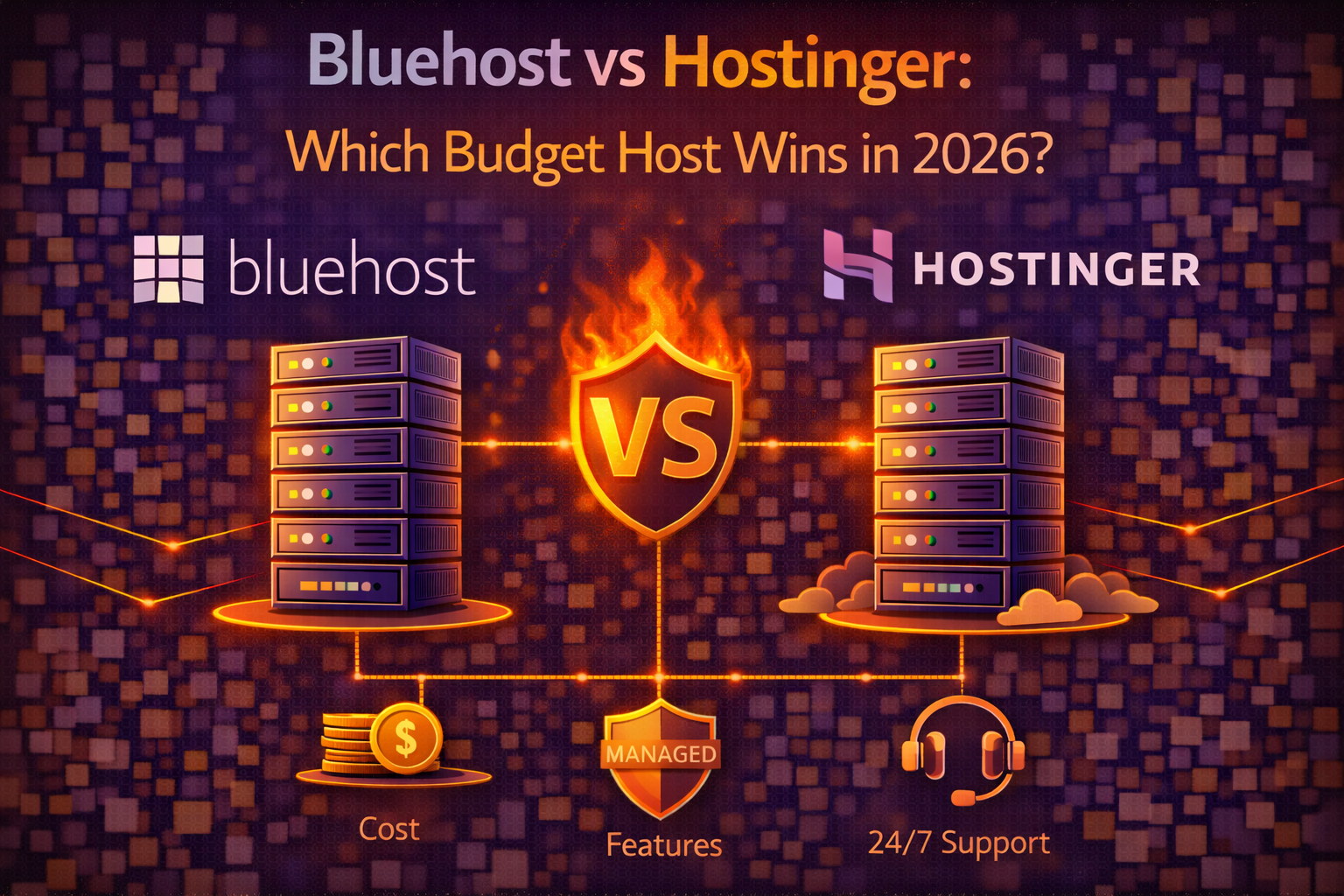
  • Bluehost vs Hostinger: Which Budget Host Wins in 2026

    Bluehost vs Hostinger: Which Budget Host Wins in 2026

    Bluehost and Hostinger are the two names that appear most frequently when someone searches for affordable web hosting, and the comparison between them comes up constantly in forums, Facebook groups, and comment sections wherever beginners ask for hosting recommendations. Both position themselves as accessible, beginner-friendly options at competitive prices. Both have large customer bases and established reputations. And both have enough genuine differences that the right choice between them depends on factors that a surface-level price comparison misses entirely.

    This comparison goes deeper than the headline numbers. It covers performance data from independent testing, the realistic long-term cost including renewal rates, the actual support experience rather than what the marketing pages claim, and the specific situations where each host has a clear advantage over the other. By the end you’ll have a clear answer for your specific situation rather than a hedged both-are-good conclusion that doesn’t actually help you decide.


    The Price Comparison That Actually Matters

    Starting with pricing is the right instinct when comparing budget hosts, but the comparison that matters is not the introductory rate — it’s the total cost over a realistic hosting timeline, because that’s what you’ll actually pay.

    Bluehost’s Basic plan currently starts at $2.95 per month on a 36-month commitment. The renewal rate for that same plan is $10.99 per month. Over three years, the Basic plan costs $35.40 in year one and $131.88 per year from year two onward — a total of $299.16 for the full three-year initial commitment period.

    Hostinger’s Premium plan starts at $2.99 per month on a 48-month commitment — marginally more expensive at the introductory rate. The renewal rate for the Premium plan is $7.99 per month. Over three years, the Premium plan costs $107.64 in year one on a 48-month deal and $95.88 per year at the renewal rate — a total that’s significantly lower than Bluehost over any extended period.

    The Business plan at Hostinger — which includes daily backups and additional performance resources that make it more directly comparable to Bluehost’s Choice Plus plan — starts at $3.99 per month introductory and renews at $8.99 per month. Bluehost’s Choice Plus plan, which is the tier that includes domain privacy and CodeGuard backups, renews at $19.99 per month.

    The long-term cost difference is not marginal. A user on Bluehost’s Choice Plus plan for three years pays substantially more than the equivalent Hostinger Business plan user over the same period. For a budget-conscious beginner choosing between the two hosts primarily on cost, the math strongly favors Hostinger once you look past the introductory rates that both providers use aggressively in their marketing.


    Performance: Closer Than Expected

    The performance comparison between Bluehost and Hostinger is one of the more interesting aspects of this head-to-head because the results contradict the expectation that a more expensive host should perform better.

    Independent server response time testing consistently shows Hostinger matching or outperforming Bluehost on shared hosting despite the lower pricing. Hostinger’s LiteSpeed web servers process requests faster than the Apache servers that Bluehost’s shared hosting infrastructure still runs, and the NVMe SSD storage on Hostinger’s Business plan delivers faster file read speeds than Bluehost’s standard SSD storage.

    Average server response times from independent monitoring place Hostinger’s Business plan at around 150 to 250 milliseconds and Bluehost’s Basic and Plus plans at 400 to 600 milliseconds. This is a meaningful difference — not transformative for a low-traffic site, but noticeable in page load speed testing and consequential for search engine optimization as traffic grows.

    Page load times for a standard WordPress installation reflect the server response time difference. Hostinger Business averages around 0.9 to 1.3 seconds in testing with basic optimization. Bluehost Basic averages 1.5 to 2.5 seconds before significant optimization work is applied. The Bluehost numbers improve with caching plugins and image optimization, but the baseline performance gap means Hostinger starts from a better position.

    Uptime monitoring over extended periods shows both hosts performing adequately, with Hostinger’s measured uptime slightly higher than Bluehost’s in most independent monitoring data. Neither host has the kind of persistent reliability problems that would make uptime a decisive factor in the comparison — both deliver acceptable uptime for the vast majority of websites at this price tier.


    WordPress Experience: Bluehost’s Clearest Advantage

    The area where Bluehost most clearly justifies its higher long-term cost is the WordPress-specific experience — and specifically the combination of the guided onboarding flow and the WordPress-trained support team.

    Bluehost’s WordPress onboarding is the most polished available from any shared hosting provider. From signup to a working WordPress site is a guided process that takes under thirty minutes and requires no technical decisions — theme selection, plugin recommendations, and initial WordPress configuration happen within a workflow that makes sense even for users who have never seen a WordPress dashboard before. The process is calibrated specifically for first-time WordPress users in a way that Hostinger’s more general onboarding is not.

    Hostinger’s WordPress installation is fast and simple — three clicks through hPanel — but it stops at installation rather than guiding you through the WordPress setup that follows. For users who know WordPress and just need it installed, this is fine. For users encountering WordPress for the first time who need guidance beyond installation, the Bluehost experience is genuinely more supportive.

    The support difference for WordPress questions is where this advantage compounds. Bluehost’s support team is trained specifically on WordPress — they can engage with questions about themes, plugins, the block editor, and WordPress-specific error messages at a level of detail that Hostinger’s more generalist support cannot consistently match. For beginners who expect to ask WordPress questions regularly while learning, the quality of WordPress-specific support is a practical differentiator rather than a theoretical one.

    The WordPress.org official recommendation that Bluehost carries is worth taking seriously in this specific context. It reflects a depth of WordPress integration and commitment to the WordPress ecosystem that has been evaluated by the WordPress.org team — not just a marketing relationship. That evaluation is relevant to the WordPress experience comparison even if it doesn’t automatically make Bluehost the better choice for every user.


    Control Panel: Hostinger’s Genuine Advantage for Beginners

    The control panel comparison runs in the opposite direction from the WordPress experience comparison. Hostinger’s hPanel is genuinely more beginner-friendly than Bluehost’s cPanel implementation, and for users whose primary interaction with their hosting account is through the control panel rather than through WordPress-specific tasks, this advantage is meaningful.

    cPanel is the industry standard for a reason — it’s comprehensive, well-documented, and familiar to anyone who has managed hosting before. It’s also dense, showing many options simultaneously in an interface designed for power users rather than beginners. Navigating cPanel for common tasks requires either prior experience or a tutorial to understand where things are.

    hPanel presents the same functionality in a cleaner, more logically organized interface. Common tasks — installing WordPress, managing domains, setting up email, configuring SSL — are more immediately findable for a user encountering the control panel for the first time. The visual design is more modern and less intimidating than cPanel’s functional-but-dated aesthetic.

    For experienced users who are comfortable with cPanel and have developed muscle memory for its layout, switching to hPanel requires an adjustment period that some users find frustrating. For new users with no prior hosting experience, hPanel’s learning curve is genuinely shallower and the day-to-day management experience is more pleasant.

    The practical implication is that the control panel advantage depends on where you’re starting. First-time hosting users benefit more from Hostinger’s hPanel. Users migrating from another cPanel host who want minimal friction in the transition benefit from Bluehost’s familiar cPanel environment.


    Features: What Each Plan Actually Includes

    Feature comparison between Bluehost and Hostinger requires looking at equivalent tiers rather than entry-level plans, because the entry plans at both providers are more limited than what most websites actually need.

    Bluehost’s Choice Plus plan — the tier most often recommended as the practical starting point — includes unlimited websites, unmetered SSD storage, free domain privacy, automated daily backups through CodeGuard Basic, and a free domain for the first year. At renewal, this plan costs $19.99 per month.

    Hostinger’s Business plan — the comparable tier — includes 100 websites, 200GB of NVMe storage, free domain for the first year, daily backups with straightforward restoration through hPanel, free CDN, and priority support. At renewal, this plan costs $8.99 per month.

    The most significant feature difference between these comparable tiers is backup implementation. Bluehost’s CodeGuard Basic backup on the Choice Plus plan is a third-party service integrated into the Bluehost account — it works but involves a separate interface and has its own terms and limitations. Hostinger’s daily backups on the Business plan are native to the platform with restoration directly through hPanel — a cleaner and more straightforward implementation.

    Storage comparison favors Hostinger — 200GB of NVMe storage versus unmetered SSD on Bluehost, where “unmetered” comes with acceptable use provisions that limit actual usage. For most websites, neither storage limit is practically constraining, but the NVMe technology on Hostinger’s storage delivers faster read speeds that contribute to the performance difference discussed earlier.

    Email hosting is included with both plans with similar functionality. Both include free SSL. Both include one-click WordPress installation. The CDN included with Hostinger Business is a genuine additional value — Bluehost’s CDN is an add-on rather than standard on comparable plans.


    Support: Neither Excels, One Is More Consistent

    Neither Bluehost nor Hostinger sets the standard for shared hosting support — that distinction belongs to SiteGround. But comparing the two against each other produces a more nuanced picture than simply saying both are adequate.

    Bluehost offers 24/7 live chat and phone support. The phone support option is a genuine differentiator — users who prefer talking through a problem have a channel that Hostinger doesn’t provide. The quality of Bluehost’s support for WordPress-specific questions is better than Hostinger’s, as discussed in the WordPress section above.

    Hostinger offers 24/7 live chat and email tickets without phone support. Response times via chat are generally fast — competitive with Bluehost. The quality for common questions is good; the quality for complex technical issues is more variable.

    The practical difference between the two support experiences is most significant for two user types. Users who ask primarily WordPress questions get better answers from Bluehost. Users who need support outside of business hours and want fast chat response times get consistent service from both, but Hostinger’s chat wait times are slightly shorter on average in independent testing.

    For the majority of beginner users whose support needs are common questions with straightforward answers, the difference between Bluehost and Hostinger support is not significant enough to drive the hosting decision. For users who anticipate needing expert WordPress guidance regularly, Bluehost’s support advantage is worth factoring in even at higher long-term cost.


    The Direct Recommendation

    The choice between Bluehost and Hostinger in 2026 comes down to what you prioritize most — and the answer is clear enough to state directly rather than hedging.

    Choose Hostinger if your primary consideration is long-term cost, if you want better baseline performance without paying more for it, if you prefer a cleaner and more modern control panel, or if your support needs are covered by text-based chat. The Business plan at Hostinger’s renewal rate delivers equivalent or better performance than Bluehost’s comparable tier at roughly half the annual cost. For budget-conscious users who are reasonably self-sufficient and don’t need the WordPress-specific hand-holding that Bluehost provides, Hostinger is the better value.

    Choose Bluehost if you are building your first WordPress website and want the most guided setup experience available, if WordPress-specific support quality matters more than long-term cost efficiency, if you prefer phone support as an option, or if you’re migrating from another cPanel host and want minimal transition friction. The higher renewal cost is the price of the WordPress experience advantage — and for the specific user who genuinely benefits from that advantage, it’s a price worth paying.

    The overlap between these two user profiles is smaller than the marketing for both hosts suggests. Most beginners fall clearly on one side or the other of this distinction, and identifying which side you’re on makes the decision straightforward.

    → Related: Hostinger Review 2026: The Best Budget Host or Too Good to Be True

    → Also worth reading: Bluehost Review 2026: Is It Still Worth It or Just Hype

    Currently trying to decide between these two for a specific project and want a direct recommendation based on your particular situation? Leave a comment describing what you’re building, your budget, and your technical comfort level and we’ll tell you exactly which one to choose.

  • Cloudways Review 2026: The Best Cloud Hosting for Non-Developers

    Cloudways Review 2026: The Best Cloud Hosting for Non-Developers

    ¡Vamos con el #11!


    Cloudways Review 2026: The Best Cloud Hosting for Non-Developers

    Web Hosting & Website Building · March 2026 · 10 min read


    Cloudways exists to solve a specific problem that the hosting market had left largely unaddressed for years. Cloud infrastructure from providers like DigitalOcean, AWS, and Google Cloud delivers meaningfully better performance and reliability than traditional shared hosting — but accessing that infrastructure directly requires server administration knowledge that most website owners don’t have and don’t want to acquire. Cloudways sits between the infrastructure and the user, providing a managed layer that makes genuine cloud hosting accessible without requiring you to know what a LAMP stack is or how to configure Nginx.

    The result is a hosting experience that’s technically more sophisticated than shared hosting in ways that produce real performance and reliability benefits, wrapped in an interface that non-developers can navigate without a systems administration background. Whether that combination justifies Cloudways’ pricing and complexity relative to managed shared hosting and managed WordPress hosting alternatives is the question this review answers directly.


    What Cloudways Actually Is and How It Differs From Traditional Hosting

    Understanding Cloudways requires understanding the distinction between infrastructure providers and managed hosting platforms, because Cloudways is the latter rather than the former — and the distinction matters for understanding both what you’re getting and what you’re paying for.

    Infrastructure providers — DigitalOcean, AWS, Google Cloud, Linode, Vultr — sell raw server capacity. When you provision a server directly from DigitalOcean, you get a virtual machine with an operating system and root access. Everything that turns that virtual machine into a functioning web server — installing and configuring the web server software, the database, PHP, security tools, and monitoring — is your responsibility. This is powerful and cost-effective for developers who know what they’re doing and time-consuming and technically demanding for everyone else.

    Cloudways takes that raw infrastructure and adds a managed layer that handles the server configuration and maintenance automatically. When you create a server on Cloudways, it provisions the underlying infrastructure from your chosen cloud provider and configures the full web server stack — Nginx or Apache, MySQL or MariaDB, PHP, Redis, Varnish — in a configuration optimized for WordPress or whichever application you’re running. The Cloudways platform manages security patches, server monitoring, and infrastructure maintenance on your behalf, while giving you access to your server environment through a dashboard that doesn’t require command-line knowledge to use effectively.

    The practical experience of using Cloudways is therefore different from both traditional shared hosting and raw cloud infrastructure. You have more control and more transparency into your server environment than shared hosting provides — you can see your server’s resource usage, configure PHP settings, manage multiple applications on a single server — while avoiding the server administration burden that raw cloud infrastructure requires.


    Performance: The Cloud Infrastructure Advantage

    The performance case for Cloudways comes down to a fundamental architectural difference from shared hosting. On shared hosting, your website’s performance is affected by every other website on the same physical server — resource contention, the bad neighbor effect, and the limitations of server configurations optimized for the average use case rather than your specific application. On Cloudways, your server is a dedicated virtual machine with resources allocated exclusively to you, running on cloud infrastructure designed for reliability and scalability.

    Independent performance testing of Cloudways consistently shows server response times in the 100 to 200 millisecond range — among the fastest in any hosting category and faster than most managed WordPress hosts including WP Engine in some testing scenarios. The specific performance depends on which underlying cloud provider you choose and the server size you provision, but even entry-level Cloudways configurations on DigitalOcean outperform most shared hosting in server response time benchmarks.

    The choice of underlying cloud provider available on Cloudways — DigitalOcean, AWS, Google Cloud, Linode, Vultr, and Cloudways’ own infrastructure — is a genuine differentiator that allows you to match the infrastructure to your audience’s geography. Selecting Google Cloud for a European audience, AWS for a US audience, or DigitalOcean for a cost-sensitive configuration gives you control over the performance-cost trade-off that traditional hosting doesn’t offer.

    Cloudways includes their built-in CDN — Cloudflare Enterprise CDN integrated directly into the platform — on all plans since their CDN add-on became standard. This CDN caches static assets at edge locations worldwide, reducing the load on your origin server and delivering content faster to visitors regardless of their geographic distance from your server. The Cloudflare Enterprise CDN that Cloudways provides is a significantly better CDN than the free Cloudflare tier that most hosting users have access to independently, with more edge locations and higher performance.

    The ThunderStack — Cloudways’ name for their server optimization stack — combines Nginx, Apache, Varnish, Redis, and Memcached in a configuration designed to maximize WordPress performance. Varnish handles full-page caching at the server level, Redis handles object caching for WordPress database queries, and the combination produces page load speeds that approach managed WordPress host performance at infrastructure costs closer to VPS pricing.


    The Cloudways Dashboard: Navigating the Complexity

    The Cloudways dashboard is where the product’s complexity and accessibility tension is most visible. It’s more sophisticated than cPanel or hPanel — there are more settings, more options, and more transparency into the server environment than beginner-oriented control panels provide. It’s also significantly more accessible than raw server management — you can accomplish most common tasks through the graphical interface without touching the command line.

    The application management section of the dashboard handles the most common website management tasks — creating new WordPress installations, managing SSL certificates, setting up staging environments, configuring caching, managing domain connections, and monitoring application performance. For these tasks, the Cloudways interface is intuitive enough that non-technical users can work through them with reasonable confidence.

    The server management section is where the complexity increases. Server-level settings — PHP configuration, MySQL settings, security hardening options, server monitoring and alerts — are accessible through the dashboard but require more context to use correctly than application-level settings. Cloudways’ documentation covers these areas well, and most users in non-developer scenarios can avoid the server management section entirely for routine operations. The settings that matter most are configured automatically during provisioning, and the application management section handles the day-to-day operations that most users actually perform.

    The staging environment that Cloudways provides through the dashboard is one of the most capable available outside of dedicated managed WordPress hosts. Creating a staging clone of a live application, making and testing changes, and pushing those changes to production is a clean workflow in the Cloudways interface that doesn’t require developer knowledge to execute. For non-technical users managing WordPress sites who want staging capability without paying managed WordPress host prices, this is one of Cloudways’ clearest value propositions.


    Pricing: The Model That’s Different From Everything Else

    Cloudways’ pricing model is fundamentally different from traditional hosting pricing, and understanding the difference is essential to evaluating whether it fits your budget and usage pattern.

    Traditional hosting pricing is fixed — you pay a set monthly fee for a specific plan regardless of how much of the allocated resources you use. Cloudways pricing is based on the server you provision — specifically, the cloud provider you choose and the server size — plus a flat platform fee that Cloudways adds on top of the infrastructure cost. The infrastructure cost varies by cloud provider and server configuration; the Cloudways platform fee adds a margin on top.

    Entry-level Cloudways configurations start at around $14 per month for a DigitalOcean-based server with 1GB of RAM and 25GB of storage. This is the minimum viable configuration for a single WordPress site with low to moderate traffic. A more practical configuration for a growing site — 2GB of RAM, 50GB of storage — runs around $28 per month on DigitalOcean. AWS and Google Cloud configurations cost more than DigitalOcean for equivalent specifications, reflecting the premium infrastructure costs of those providers.

    The lack of introductory discounts at Cloudways is actually a positive feature of their pricing model compared to traditional hosting. What you see on the pricing page is what you pay — there’s no promotional rate followed by a renewal rate shock. The $14 per month entry configuration costs $14 per month in month one and $14 per month in month three years later. For users who have been burned by hosting renewal pricing, this consistency is genuinely refreshing.

    The consumption-based element of Cloudways pricing — where hosting additional applications on the same server doesn’t increase the base cost, only the resource configuration you provision — makes it particularly cost-effective for users managing multiple websites. Adding a second or third WordPress site to an existing Cloudways server costs nothing in terms of the server fee, only the additional server resources consumed. For developers and agencies managing multiple client sites, the per-site cost on Cloudways drops significantly as the number of sites on a single server increases.


    Security and Backups: Solid but Requiring Attention

    Cloudways handles server-level security automatically — operating system patches, security updates, and the infrastructure-level protections that come with running on major cloud provider networks. The managed security at the server level means you’re not responsible for keeping the underlying infrastructure patched and updated, which is one of the primary risks of unmanaged VPS hosting.

    Automated backups are available on Cloudways with configurable frequency — daily, twice daily, or weekly — and retention periods of up to four weeks depending on the backup frequency selected. The backup restoration process through the dashboard is straightforward, and Cloudways stores backups offsite from the primary server location, which means a server-level incident doesn’t compromise the backup copies.

    The backup situation has one important nuance worth noting. Cloudways backups are managed at the application level — they back up the WordPress files and database for each application on your server. They do not include server-level snapshots by default, though snapshot functionality is available separately. For most WordPress users, application-level backups are what matters and what Cloudways provides well. For users with more complex server configurations, understanding the difference between application backups and server snapshots is worth time before relying on the backup system.

    Free SSL through Let’s Encrypt is included and manageable through the dashboard. The SSL configuration on Cloudways uses current security standards and the renewal process is automatic, handled by the platform rather than requiring manual intervention.

    Cloudways does not include a web application firewall in their default configuration — this is a gap relative to managed WordPress hosts that include WAF protection by default. Cloudflare’s WAF is available through the Cloudflare integration, and configuring it through the Cloudways dashboard is accessible enough for non-developers, but it requires deliberate setup rather than being included automatically.


    Who Cloudways Is Right For

    Cloudways delivers its strongest value for a specific type of user that sits between beginner and developer — someone who has some technical comfort, manages one or more WordPress sites that have outgrown shared hosting, and wants the performance and reliability of cloud infrastructure without the server administration burden of unmanaged VPS.

    For agencies managing multiple client WordPress sites, Cloudways’ ability to host multiple applications on a single server at a single monthly cost produces per-site economics that are better than managed WordPress hosts by a significant margin. An agency hosting ten client sites on a $56 per month Cloudways server — a 4GB RAM DigitalOcean configuration — pays $5.60 per site per month for cloud infrastructure performance. WP Engine’s per-site pricing at the Growth plan level works out to $11.50 per site per month.

    For growing WordPress sites that have hit the performance ceiling of shared hosting but can’t justify managed WordPress hosting costs, Cloudways’ entry configurations deliver meaningful performance improvements at prices that bridge the gap. Moving a WordPress site from shared hosting to a $14 per month Cloudways DigitalOcean server typically produces server response time improvements of 40 to 60 percent based on independent testing — a significant performance upgrade for less than the cost of SiteGround’s GrowBig renewal.

    Cloudways is not the right choice for absolute beginners who want the simplest possible path to a working website. The setup process is more involved than traditional shared hosting, and the dashboard complexity requires more context to navigate confidently than cPanel or hPanel. For beginners, Hostinger or SiteGround provide a better-matched experience. For users who have some hosting experience and are ready for something more capable, Cloudways is the step up that makes the most sense.


    Takeaways

    Cloudways occupies a genuinely useful position in the hosting market — it makes cloud infrastructure accessible to non-developers in a way that produces real performance and reliability benefits over shared hosting, at pricing that’s more straightforward and often more cost-effective than managed WordPress alternatives. The complexity trade-off is real but manageable for users with basic technical comfort, and the performance advantages are consistent enough across independent testing to validate the product’s core value proposition.

    For the right user — someone with existing sites that have outgrown shared hosting, some technical comfort, and either multiple sites to host or a budget for quality cloud infrastructure — Cloudways is the best value in its category. For beginners or users who want the simplest possible experience above all else, the complexity makes it the wrong fit regardless of the performance benefits.

    → Related: The Best AI Automation Tools for Small Businesses in 2026 (Zapier, Make, and More)

    → Also worth reading: The Best Web Hosting for Small Businesses in 2026

    Currently on shared hosting and wondering whether the migration to Cloudways would produce noticeable improvements for your specific site, or trying to decide between Cloudways and a managed WordPress host for a growing site? Leave a comment with your traffic level, current host, and budget and we’ll give you a direct recommendation.

  • Hostinger Review 2026: The Best Budget Host or Too Good to Be True

    Hostinger Review 2026: The Best Budget Host or Too Good to Be True

    Hostinger has done something genuinely difficult in the web hosting market — it has built a reputation for value that holds up under scrutiny rather than collapsing when you look past the headline pricing. In a category where cheap hosting almost always means slow servers, inadequate support, and a billing experience designed to maximize charges through upsells and surprise renewal increases, Hostinger’s combination of low pricing and reasonable performance has earned it a following that’s based on actual experience rather than affiliate incentives.

    That said, Hostinger is not without trade-offs, and understanding where they cut costs to maintain their pricing is as important as understanding what they deliver well. This review covers both sides with the specificity that actually helps you decide whether Hostinger fits your situation — not just whether it’s cheap, but whether cheap means good enough for what you’re building.


    How Hostinger Keeps Prices Low Without Destroying Quality

    The question that any honest Hostinger review needs to answer is how a hosting provider can charge significantly less than competitors while running a profitable business. The answer involves several business decisions that collectively explain the pricing without requiring you to assume the product is secretly terrible.

    Scale is the first factor. Hostinger serves over 3 million customers across more than 150 countries, which gives them purchasing power and infrastructure efficiency that smaller providers can’t match. The per-customer cost of running servers, support, and infrastructure decreases significantly at that scale, and Hostinger passes a portion of those savings to customers through lower pricing rather than capturing it entirely as margin.

    Infrastructure investment over customer service headcount is the second factor. Hostinger has invested heavily in LiteSpeed web servers, NVMe SSD storage, and their custom hPanel control panel — technology that reduces the server resources required to serve pages and therefore reduces the cost per hosted site. At the same time, their support model relies primarily on chat and tickets rather than phone support, which costs significantly less to staff than a phone support operation. The trade-off is real — no phone support — but the infrastructure investment means fewer support contacts are needed in the first place.

    The third factor is their pricing model. Hostinger’s introductory rates are genuinely aggressive, and their renewal rates — while higher than introductory rates — are lower than most competitors’ renewal rates. This means the gap between what new customers pay and what long-term customers pay is smaller than at providers like Bluehost or SiteGround, which creates a more honest long-term pricing relationship even if the introductory discount is still significant.


    Performance: Better Than the Price Suggests

    Hostinger’s performance on their shared hosting plans is the biggest positive surprise for users who expect budget pricing to mean budget performance. Independent testing consistently shows Hostinger delivering server response times and page load speeds that compete with providers charging two to three times more at renewal.

    Server response times on Hostinger’s Business and Premium plans — the tiers most users should consider — average around 150 to 300 milliseconds in independent testing from US-based monitoring locations. This is comparable to SiteGround’s response times and significantly faster than Bluehost’s shared hosting performance. The LiteSpeed web servers that Hostinger runs across their infrastructure are a meaningful contributor to this — LiteSpeed handles concurrent requests more efficiently than Apache, which translates directly to faster response times under load.

    Page load times for a standard WordPress installation on Hostinger’s Business plan average around 0.9 to 1.3 seconds in independent testing with basic optimization enabled. This is genuinely fast for shared hosting and fast enough that performance is unlikely to be a limiting factor for most websites until traffic reaches levels that shared hosting can’t handle regardless of provider.

    The NVMe SSD storage that Hostinger uses on their current plans delivers faster file read and write speeds than the standard SSD storage that most budget hosts use. For WordPress sites where database queries and file reads happen with every page load, the storage speed difference contributes to the overall performance advantage Hostinger delivers at their price point.

    Uptime monitoring from independent sources shows Hostinger consistently achieving 99.95% to 99.98% uptime over extended monitoring periods. This is better than their 99.9% guarantee and competitive with providers charging significantly more. The occasional uptime dips that do appear in monitoring data are typically brief and infrequent rather than the extended outages that characterize genuinely unreliable hosting.


    hPanel: The Control Panel That’s Actually Better Than cPanel

    One of the most underappreciated aspects of Hostinger’s offering is their custom control panel. Most budget hosts use cPanel — the industry standard — which is functional but dense, showing dozens of options simultaneously in an interface designed for comprehensive control rather than intuitive navigation. hPanel, Hostinger’s custom alternative, takes a different approach.

    hPanel organizes the most common hosting management tasks — WordPress installation, domain management, email setup, file management, SSL configuration — in a clean, logically structured interface that new users can navigate without a tutorial. The visual design is modern and the information architecture reflects how people actually use hosting management rather than how hosting companies think about their infrastructure.

    For users who have previous cPanel experience, the transition to hPanel requires adjustment — familiar features are in different places, and some cPanel functionality either doesn’t exist in hPanel or is accessed differently. For users with no prior hosting experience, hPanel is genuinely easier to learn than cPanel, which is a meaningful advantage for the beginner audience that represents a significant portion of Hostinger’s customer base.

    WordPress installation through hPanel is three clicks and under two minutes. The WordPress management section provides a clear overview of installed WordPress sites, their update status, and quick access to common management tasks. Hostinger’s AI website builder — included with their plans — is accessible directly from hPanel for users who want to build without WordPress, though the AI builder is more appropriate for simple brochure sites than for anything requiring significant customization.


    Plans and Pricing: The Honest Picture

    Hostinger offers four main shared hosting plans in 2026: Single, Premium, Business, and Cloud Starter. Understanding which tier makes sense for different situations requires looking at both the features and the realistic pricing over time.

    The Single plan — their entry-level option — is genuinely limited in ways that make it inappropriate for most real websites. It covers one website, 50GB of storage, and lacks some features available on higher tiers. It’s appropriate as a proof-of-concept environment or for an extremely simple single-page site but not for anything expected to grow or require full functionality.

    The Premium plan is the minimum tier that most users should consider. It covers 100 websites, 100GB of NVMe storage, free domain for the first year, and the full hPanel feature set. Introductory pricing runs around $2.99 per month on a 48-month commitment, with renewal rates that are higher but lower than most competitors — currently around $7.99 per month at renewal, which is the number that matters for long-term cost comparison.

    The Business plan adds daily backups, a free CDN, and improved performance resources that make a measurable difference for WordPress sites with moderate traffic. At around $3.99 per month introductory and $8.99 per month at renewal, it’s the tier that delivers the best balance of features and performance for most websites. The daily backup inclusion is particularly valuable — it’s a feature that budget hosts typically charge extra for or exclude entirely.

    The Cloud Starter plan sits between shared hosting and VPS in terms of resources, offering dedicated resources rather than shared allocation. At around $9.99 per month introductory and $19.99 per month at renewal, it’s appropriate for websites that have outgrown standard shared hosting but don’t yet need a full VPS configuration.

    The domain situation at Hostinger deserves specific mention. The free first-year domain included with Premium and higher plans is a genuine benefit, and the renewal rates for domains at Hostinger are among the lower ones in the market — .com renewals typically around $13 to $15 per year, which is competitive with dedicated domain registrars rather than inflated as they are at some hosting providers.


    Support: The Genuine Limitation

    Hostinger’s support is the area where the budget pricing trade-off is most visible, and being honest about this limitation is more useful than glossing over it in the name of a positive review.

    Support is available 24/7 via live chat and email tickets. There is no phone support — a deliberate business decision that reduces support staffing costs and is one of the mechanisms through which Hostinger maintains its pricing. For users who are comfortable resolving issues through text-based communication and who are willing to work through a support conversation rather than talking through a problem, this limitation is manageable. For users who prefer phone support for complex issues or who find text-based troubleshooting frustrating, it’s a genuine gap.

    The quality of Hostinger’s chat support is inconsistent in a way that appears regularly in independent reviews. Common questions — how to install WordPress, how to set up email, how to connect a domain — are handled well, with accurate and clear responses. More complex technical issues — server configuration problems, unusual error states, migration complications — produce more variable results, with some agents providing accurate expert guidance and others providing generic troubleshooting steps that don’t address the specific situation.

    Response times via live chat are generally fast — under three minutes in most independent tests — which is better than many providers with phone support. The speed of getting a response is not the issue; the depth and accuracy of the response for non-standard problems is where improvement would make the biggest difference to the overall support experience.

    The knowledge base and tutorial library at Hostinger is extensive and covers most common hosting and WordPress topics with enough depth to resolve the majority of beginner questions without contacting support. For users willing to search before asking, the documentation quality reduces the frequency with which support contact is necessary.


    Security Features: Adequate for Most, Not Comprehensive

    Hostinger’s security offering is adequate for standard website security needs but less comprehensive than what SiteGround provides at their premium price point. Free SSL through Let’s Encrypt is included and automatically configured on all plans. Malware scanning is available through their security suite, though the implementation is less sophisticated than SiteGround’s AI anti-bot system.

    The daily backups included on Business and higher plans are a genuine security feature in the sense that they provide recovery options when something goes wrong. The restoration process through hPanel is straightforward enough that most users can perform a restoration without contacting support, which is an important practical consideration when something breaks and you need to act quickly.

    Cloudflare integration is available through hPanel for users who want to add CDN and DDoS protection on top of Hostinger’s default security measures. The integration is straightforward to configure and adds a meaningful security layer at no additional cost for users willing to set it up.

    Two-factor authentication for hPanel login is available and worth enabling — it’s one of the simplest security measures available and one that many hosting users skip despite its clear benefit.


    Who Hostinger Is Right For

    Hostinger is the right choice in several specific situations that together cover a large proportion of website owners.

    It’s the right choice for beginners who want modern, well-designed hosting at the lowest realistic long-term cost. The hPanel experience, the WordPress installation simplicity, and the performance that exceeds what the pricing implies make it the best starting point for first-time website builders who don’t have a specific reason to pay more.

    It’s the right choice for cost-conscious small business owners whose websites don’t generate revenue directly and where the performance difference between Hostinger and premium hosts doesn’t have a measurable business impact. A local service business with a five-page informational website serving a few hundred visitors per month doesn’t need SiteGround performance — Hostinger’s performance is more than adequate.

    It’s the right choice for developers and agencies managing multiple client sites who need reliable hosting at a price point that makes client projects economically viable. The 100-website limit on the Premium plan and the Business plan’s performance and backup features cover most agency use cases at a fraction of what individual managed hosting for each site would cost.

    It is not the right choice for businesses where website performance directly affects revenue and where the gap between Hostinger and premium hosts translates into measurable differences in search rankings or conversion rates. It is not the right choice for users who require phone support or who anticipate needing frequent expert technical assistance. And it is not the right choice for high-traffic sites that have outgrown shared hosting constraints — the Cloud Starter plan addresses the transition point, but serious traffic levels require VPS or cloud hosting that Hostinger’s offering doesn’t fully address.


    The Verdict

    Hostinger in 2026 is genuinely good value — not in the sense of being cheap and acceptable, but in the sense of delivering performance and features that justify their pricing even when the pricing is compared against more expensive alternatives rather than just other budget hosts. The combination of LiteSpeed infrastructure, NVMe storage, hPanel’s beginner-friendly design, and renewal rates that stay lower than most competitors produces a hosting experience that’s better than its price suggests across almost every dimension except support depth.

    The support limitation is real and worth taking seriously in your evaluation. If phone support or consistently expert-level technical assistance is important to your situation, pay more for a host that delivers it. If text-based support for common issues is sufficient and you can use the documentation to resolve less common ones, Hostinger’s limitation in this area doesn’t change the value calculation significantly.

    → Related: Hostinger vs GoDaddy: Which One Should You Actually Use in 2026

    → Also worth reading: The Best Web Hosting for Beginners in 2026 (Tested and Ranked)

    Currently considering Hostinger for a specific project and want to know whether the Business or Premium plan makes more sense for your situation, or comparing Hostinger against a specific alternative? Leave a comment with the details and we’ll give you a direct recommendation.

  • Bluehost Review 2026: Is It Still Worth It or Just Hype

    Bluehost Review 2026: Is It Still Worth It or Just Hype

    Bluehost is one of the most recognizable names in web hosting, and that recognition is both its greatest asset and its biggest liability when it comes to honest evaluation. The official WordPress.org recommendation, the massive advertising presence, and the sheer volume of affiliate-driven reviews that rank it at the top of every list have created a reputation that’s difficult to assess objectively — is Bluehost genuinely good, or has it simply outspent its way to the top of search results?

    The honest answer in 2026 is more nuanced than either the enthusiastic affiliate reviews or the cynical dismissals suggest. Bluehost has real strengths that make it genuinely appropriate for specific use cases, real limitations that make it the wrong choice for others, and a pricing structure that requires careful reading to understand what you’re actually committing to. This review covers all three with the specificity that actually helps you decide rather than just validating whatever you were already leaning toward.


    Who Bluehost Is Actually Built For

    Understanding who Bluehost serves best makes the rest of this review easier to interpret. Bluehost is not trying to be the fastest host, the cheapest host at renewal, or the most technically sophisticated option in the market. It is trying to be the most accessible WordPress hosting experience for people who are new to building websites and want the process to be as guided and friction-free as possible.

    That positioning is coherent and the execution is reasonable. The problem is that the affiliate review ecosystem has expanded that positioning into a universal recommendation — Bluehost for everyone, regardless of use case — which it isn’t. A developer building a high-traffic application, a business owner prioritizing long-term cost efficiency, and a performance-obsessed blogger are all better served by other options. A first-time website builder who wants to launch a WordPress site with minimal friction and has WordPress-specific questions they’ll need help answering is Bluehost’s actual target customer, and for that customer, Bluehost does its job reasonably well.


    Performance: Adequate But Not Impressive

    Performance testing of Bluehost’s shared hosting plans in 2026 produces results that are best described as adequate. Server response times — the time between a browser sending a request and the server beginning to respond — average around 400 to 600 milliseconds in independent testing, which is slower than SiteGround and Hostinger but within the range that most new websites can work with before traffic volume makes performance critical.

    Page load times on Bluehost’s standard shared plans average in the 1.5 to 2.5 second range for a basic WordPress installation with a lightweight theme and no performance optimization. With caching enabled through a plugin like WP Rocket or W3 Total Cache and images properly optimized, those times improve to 0.8 to 1.2 seconds — competitive with most shared hosting at this price point. The key phrase is “with optimization” — Bluehost’s performance out of the box is mediocre, and achieving competitive page load times requires configuration that not all beginners will think to do.

    The performance picture improves on Bluehost’s Choice Plus and higher plans, which include additional resources and their Object Cache Pro feature for improved database query performance. These plans cost more — the Choice Plus plan starts at around $5.45 per month on introductory pricing — but the performance improvement for WordPress sites with dynamic content is measurable in testing.

    Uptime on Bluehost has been a point of criticism in some independent monitoring data, with some monitoring sources recording uptime in the 99.95% to 99.98% range over extended periods — good but not exceptional. Occasional reports of shared server overcrowding producing performance degradation during peak hours appear in user forums and review sites with enough frequency to be worth noting, though the experience is inconsistent enough that many users never encounter it.


    WordPress Integration: The Genuine Strength

    The area where Bluehost’s reputation is most justified is WordPress integration, and specifically the onboarding experience for new WordPress users. The setup flow that Bluehost has built around WordPress is the most guided available from any major hosting provider — it walks new users through WordPress installation, theme selection, plugin recommendations, and initial configuration in a sequence that makes sense even if you’ve never touched WordPress before.

    The WordPress-specific support team is the other genuine differentiator. When you contact Bluehost support with a WordPress question — why is my theme not displaying correctly, how do I set up a contact form, what’s causing this plugin conflict — you’re talking to people trained specifically on WordPress rather than general hosting technicians who happen to know some WordPress. For beginners whose primary questions are WordPress questions rather than hosting questions, this distinction matters in practice.

    The WordPress Marketplace that Bluehost has built into their dashboard provides curated theme and plugin recommendations with one-click installation, which reduces the overwhelm of navigating WordPress’s enormous ecosystem when you don’t know where to start. This is not a feature that experienced WordPress users need or particularly value, but it’s genuinely useful for the beginner audience Bluehost is targeting.

    Bluehost also offers automatic WordPress updates, which keeps your installation current without requiring manual updates. This is standard on managed WordPress hosts but less common on shared hosting — having it included reduces one of the security risks associated with outdated WordPress installations.


    Pricing: The Number That Changes Everything

    Bluehost’s pricing story has two chapters that look very different from each other, and understanding both is essential to making an informed decision.

    Chapter one is the introductory pricing. The Basic plan currently starts at $2.95 per month on a 36-month commitment, the Choice Plus plan at $5.45 per month. These prices are competitive with other shared hosting providers in the budget tier and are what most review sites and comparison pages feature prominently.

    Chapter two is the renewal pricing. The Basic plan renews at $10.99 per month. The Choice Plus plan renews at $19.99 per month. The Plus plan, which sits between them, renews at $14.99 per month. These renewal rates are among the higher ones in the shared hosting category — significantly higher than Hostinger’s renewal rates and comparable to SiteGround’s, which offers better performance at similar renewal pricing.

    The math of a three-year commitment at the Basic tier looks like this: year one costs $35.40 at the promotional rate, years two and three cost $131.88 each year at the renewal rate for a total of $299.16 over three years. A host that charges $8 per month at renewal for equivalent service costs $288 over the same period — slightly less, and with the possibility of better performance. The total cost comparison over a realistic hosting timeline is a better basis for decision-making than the headline price comparison.

    The domain situation adds another layer. Bluehost includes a free domain for the first year, which is a genuine benefit if you don’t already have a domain. The renewal cost for that domain — typically $15 to $20 per year for a .com — kicks in from year two, which is worth factoring into the total cost calculation.

    Upsells during checkout are a consistent complaint in Bluehost user reviews. The checkout process includes pre-selected add-ons — CodeGuard Basic backup service, Bluehost’s SEO tools, and domain privacy — that add to the total cost unless actively deselected. This is a common practice in the hosting industry but Bluehost’s implementation is more aggressive than some competitors, and users who complete checkout without carefully reviewing the order summary sometimes pay for services they didn’t intend to add.


    Security and Backups: Read the Fine Print

    Bluehost includes a free SSL certificate through Let’s Encrypt on all plans — standard across reputable hosts in 2026. Domain privacy is available but not included free on all plans, which contributes to the checkout upsell dynamic mentioned above.

    The backup situation at Bluehost is worth reading carefully because it has changed over the years and the current policy is less generous than it once was. Automated daily backups are included on the Choice Plus plan and above but not on the Basic plan. The Basic plan includes a “site backup” feature but the restoration process requires contacting support and is not guaranteed — Bluehost’s terms note that backup availability is not assured and restoration may not always be possible. For a basic personal site this is an acceptable limitation. For any site where data loss would be consequential, it’s a significant gap that either pushes you toward a higher-tier plan or toward using a third-party backup plugin like UpdraftPlus.

    The CodeGuard Basic backup service that appears as an upsell during checkout addresses the backup gap on the Basic plan — but it’s an additional $2.99 per month that makes the total cost calculation less favorable compared to providers that include comprehensive backups at all tiers.


    Support: Better Than Average, Not Best in Class

    Bluehost’s support is available 24/7 via live chat and phone, with a knowledge base covering common issues. The phone support option differentiates them from budget hosts that rely primarily on chat and ticket systems, and for users who prefer talking through a problem, this is a genuine benefit.

    The quality of support is inconsistent in a way that appears regularly in independent reviews. Responses to common WordPress and hosting questions are generally good — the WordPress-trained support team delivers on their positioning for this category of question. Responses to less common technical issues are more variable, with some users reporting accurate and helpful guidance and others reporting being bounced between support agents or receiving generic troubleshooting steps that don’t address the specific issue.

    The average live chat wait time at Bluehost is longer than at SiteGround, which is the benchmark for fast support response in the shared hosting category. During peak hours, wait times of five to fifteen minutes for live chat are common based on independent testing. This is acceptable rather than exceptional — better than budget hosts with slow ticket-only support, not as good as providers that consistently answer in under two minutes.


    The Verdict: Right for Some, Wrong for Others

    Bluehost in 2026 is a host that does what it’s designed to do reasonably well for the audience it’s designed to serve. If you are building your first WordPress website, want the most guided setup experience available, and value WordPress-specific support over raw performance or long-term cost efficiency, Bluehost delivers on those priorities.

    If you are optimizing for long-term cost — taking renewal pricing seriously in your comparison — Hostinger offers similar beginner accessibility at meaningfully lower renewal rates. If you are optimizing for performance and support quality and are willing to pay a premium for both, SiteGround delivers noticeably better results on both counts at comparable renewal pricing. If you are an experienced user who doesn’t need the guided WordPress onboarding that justifies Bluehost’s positioning, there is almost no scenario where Bluehost is the best available option.

    The WordPress.org recommendation matters and should be taken seriously as a signal of the depth of WordPress integration Bluehost provides. It should not be taken as a universal endorsement that overrides the performance, pricing, and support comparisons that a careful evaluation reveals.

    → Related: Bluehost vs Hostinger: Which Budget Host Wins in 2026

    → Also worth reading: The Best Web Hosting for Beginners in 2026 (Tested and Ranked)

    Currently using Bluehost and wondering whether the renewal pricing makes switching worth the migration effort, or trying to decide between Bluehost and a specific alternative? Leave a comment with your situation and we’ll give you a direct assessment.