Your go-to resource for web hosting reviews, website builder comparisons, and step-by-step guides for building a faster, more reliable website in 2026.

  • The Best Web Hosting for Beginners in 2026 (Tested and Ranked)

    The Best Web Hosting for Beginners in 2026 (Tested and Ranked)

    Choosing your first web host is one of those decisions that feels more complicated than it needs to be. The market is crowded with providers making nearly identical claims about speed, reliability, and support, and the review landscape is polluted with affiliate-driven recommendations that rank whoever pays the highest commission rather than whoever actually performs best for beginners.

    This post approaches the question differently. The recommendations here are based on what actually matters for someone building their first website — ease of setup, reliable performance at entry-level pricing, quality of beginner-oriented support, and honest total cost including renewal rates. A host that’s technically impressive but requires server administration knowledge to configure properly isn’t a good beginner host regardless of its benchmark scores.

    The five hosts covered here represent the best options across different priorities — best overall value, best performance at low cost, best support experience, best for WordPress specifically, and best for those who want simplicity above everything else. Understanding what each does best helps you match the right option to your specific situation rather than just picking whoever ranks first.


    What Makes a Host Actually Good for Beginners

    Before getting into specific recommendations, it’s worth being clear about the criteria that matter most for beginners specifically, because they’re different from the criteria that matter for experienced developers or high-traffic sites.

    Setup simplicity is the first consideration. A beginner host should make it possible to go from signup to a working website in under an hour without requiring technical knowledge. This means a clean onboarding process, one-click WordPress installation, and a control panel that doesn’t require a tutorial to navigate. The hosts that excel here have clearly invested in the new user experience rather than assuming everyone arrives with prior hosting knowledge.

    Support quality matters more for beginners than for any other user category because the questions beginners ask — how do I install WordPress, why is my site showing an error, how do I set up my email — are the ones that require patient, clear explanation rather than technical depth. Live chat support that responds in minutes and explains things without condescension is worth more to a beginner than access to advanced developer tools.

    Reliable performance at entry pricing is the third consideration. Beginners typically start on shared hosting, and the performance variance between shared hosting providers is significant. A host that delivers fast page loads and consistent uptime at entry-level prices sets the right foundation from the start. A host that’s cheap but slow creates a performance problem that becomes increasingly expensive to fix as a site grows.

    Transparent pricing is the fourth consideration, and it directly informed which hosts made this list. Providers with dramatic gaps between introductory and renewal pricing, or with numerous upsells during the checkout process, create a worse experience for beginners who may not be equipped to recognize and navigate those tactics.


    Hostinger: Best Overall for Beginners

    Hostinger has become the go-to recommendation for beginner hosting for reasons that hold up under scrutiny rather than just marketing. The combination of genuinely low pricing — including renewal rates that are lower than most competitors — solid performance, and a clean control panel experience makes it the strongest overall value in the beginner category.

    The hPanel control panel that Hostinger uses instead of the industry-standard cPanel is genuinely better for beginners. It’s cleaner, more logically organized, and less intimidating than cPanel’s dense interface. WordPress installation takes three clicks. The onboarding flow for new accounts walks you through the initial setup steps clearly. For someone who has never managed web hosting before, the learning curve with hPanel is noticeably shallower than with most alternatives.

    Performance testing of Hostinger’s shared plans consistently shows server response times and page load speeds that are competitive with providers charging significantly more. This is partly because Hostinger has invested in modern infrastructure — LiteSpeed web servers, which are faster than the Apache servers that many budget hosts still run, and data centers on multiple continents that allow you to choose a server location close to your target audience.

    The pricing picture at Hostinger is more honest than most. Their Premium plan — the one most beginners should start with — currently runs around $2.99 per month on a 48-month commitment, with renewal rates that stay in a reasonable range rather than tripling after the introductory period. The 30-day money-back guarantee gives you time to test the actual experience before committing fully.

    The areas where Hostinger makes trade-offs are worth knowing. Their customer support is primarily chat and ticket-based — there’s no phone support, which some users prefer for complex issues. The chat support quality is generally good for common beginner questions but can be slower for technical issues that require escalation. Daily backups are available but the restoration process is less seamless than on premium providers — it works, but it requires more steps than it should.


    Bluehost: Best for WordPress Beginners

    Bluehost occupies a specific position in the beginner hosting market: it’s the host officially recommended by WordPress.org, and that endorsement reflects a genuine depth of WordPress integration that makes it particularly appropriate for beginners building WordPress sites specifically.

    The WordPress setup experience on Bluehost is the most streamlined available. New accounts can have a working WordPress site within minutes of signing up — the onboarding flow installs WordPress automatically and walks you through the initial configuration with guidance that’s calibrated for users who’ve never touched WordPress before. For absolute beginners whose end goal is a WordPress website, this guided experience reduces the setup friction significantly.

    Bluehost’s support for WordPress-specific questions is also a genuine strength. Their support team is trained specifically on WordPress issues, which means the answers beginners get to questions about themes, plugins, and WordPress settings are more reliably accurate than from hosts with more generalist support teams. This matters because the most common beginner problems are WordPress problems rather than hosting problems, and having support that understands the difference is practically valuable.

    The pricing caveat with Bluehost is significant enough to mention prominently. Their introductory pricing — currently around $2.95 per month for the Basic plan on a 36-month commitment — is competitive, but the renewal rate at around $10.99 per month is among the higher renewal rates in the beginner shared hosting category. Over a three-year period, the total cost of Bluehost hosting is higher than Hostinger for equivalent plans, which is a legitimate factor in the decision for budget-conscious beginners.

    Performance on Bluehost’s shared plans is adequate for new websites but trails Hostinger and SiteGround on benchmark testing. Page load times are acceptable rather than impressive, and server response times can be slower during peak periods. For a new site with modest traffic, this limitation is unlikely to cause practical problems, but it’s worth knowing as your site grows and performance becomes more consequential.


    SiteGround: Best Support Experience

    SiteGround is the premium option in the beginner hosting category — more expensive than Hostinger and Bluehost at the renewal rate, but offering a noticeably better support experience and stronger performance that justifies the higher cost for beginners who prioritize those factors.

    The support quality at SiteGround is the best in the shared hosting category. Response times via live chat are consistently fast, the support team is technically knowledgeable, and the quality of explanations for beginner questions is high. For a beginner who expects to need regular support while learning how websites work, the difference between SiteGround’s support and budget host support is meaningful enough to influence the hosting decision.

    SiteGround’s performance on shared hosting is also among the best available at this tier. They’ve invested in Google Cloud infrastructure for their servers, LiteSpeed caching, and a custom CDN that delivers fast page loads globally. The practical difference in page load times between SiteGround and budget shared hosting is visible in real-world testing — not transformative, but consistent.

    The pricing reality of SiteGround is the main limitation for budget-conscious beginners. Their StartUp plan starts at around $3.99 per month on the introductory rate and renews at $14.99 per month — the highest renewal rate of any host on this list. For a beginner who plans to stay on shared hosting for several years, the total cost is significantly higher than alternatives. SiteGround makes more sense for beginners who are willing to pay a premium for a noticeably better experience, or for those who plan to upgrade to a higher hosting tier within a year or two and are essentially using the introductory pricing as a low-cost trial period.


    DreamHost: Best for Month-to-Month Flexibility

    DreamHost doesn’t get as much attention as Bluehost or SiteGround in beginner hosting comparisons, but it fills an important niche: it’s the best option for beginners who don’t want to commit to a multi-year contract to access a reasonable price.

    Most hosting providers reserve their competitive pricing for annual or multi-year commitments. DreamHost’s Shared Starter plan is available month-to-month at $4.95 per month — a price that’s higher than the introductory annual rates of competitors but significantly lower than most providers’ month-to-month pricing. For beginners who aren’t ready to commit to a year or more of hosting before they know whether their website project will stick, this flexibility has real value.

    DreamHost also offers a 97-day money-back guarantee — the most generous in the industry — which is genuinely useful for beginners who want extended time to evaluate whether the hosting meets their needs before the refund window closes. The 30-day guarantees offered by most competitors are adequate for experienced users who can quickly assess a host’s performance, but a beginner may need more time to encounter the situations that reveal a host’s true strengths and limitations.

    Performance on DreamHost’s shared plans is solid without being exceptional. They use SSD storage, offer free SSL, and include a free domain with annual plans. The custom control panel — DreamHost uses their own interface rather than cPanel — is clean and functional, though it takes some adjustment for users accustomed to the cPanel layout that most hosting tutorials reference.

    The support experience at DreamHost is good but not as immediately responsive as SiteGround. Live chat is available during business hours, with ticket support available around the clock. For beginners who primarily need support during business hours and don’t anticipate urgent after-hours issues, this is adequate. For those who might need support at unpredictable hours, the limited live chat availability is a genuine limitation.


    Hostinger vs Bluehost vs SiteGround: The Direct Comparison

    Putting the three main options side by side clarifies the decision for most beginners.

    Hostinger wins on value. Lower introductory pricing, lower renewal pricing, modern infrastructure, and a cleaner control panel than Bluehost make it the best starting point for most beginners — particularly those who are price-sensitive and comfortable with chat-based support.

    Bluehost wins on WordPress integration. The guided WordPress setup, WordPress-trained support team, and official WordPress.org recommendation make it the most beginner-friendly option specifically for WordPress sites. The higher renewal cost is the trade-off.

    SiteGround wins on support and performance. The premium support experience and stronger performance justify the higher cost for beginners who will rely heavily on support while learning and for whom site speed matters from day one. The highest renewal rate of the three is the significant trade-off.

    For the majority of beginners building their first website, Hostinger is the recommendation — lower long-term cost, modern infrastructure, and a beginner-friendly control panel that doesn’t sacrifice performance for simplicity. Beginners who know they’re building a WordPress site and want the most guided experience should consider Bluehost. Beginners willing to pay more for the best support experience should consider SiteGround.


    The One Thing That Matters More Than Which Host You Choose

    The single most important thing a beginner can do when setting up hosting isn’t choosing the perfect provider — it’s actually launching the website. Analysis paralysis affects a significant number of people who spend weeks evaluating hosting options and never build anything. Any of the hosts on this list will support a successful website. The differences between them matter at the margin, not at the fundamental level.

    Choose the host that fits your budget and priorities from the options above, set up your site, and start creating content. The hosting decision can always be revisited when you have real experience with your site’s performance and actual requirements rather than theoretical ones.

    → Related: The Best Web Hosting for Small Businesses in 2026

    → Also worth reading: How Much Does Web Hosting Really Cost in 2026 (No Hidden Fees Guide)

    Building your first website and still not sure which host fits your specific situation after reading this? Leave a comment describing your project, your budget, and whether you’re planning to use WordPress — we’ll give you a direct recommendation.
  • How Much Does Web Hosting Really Cost in 2026 (No Hidden Fees Guide)

    How Much Does Web Hosting Really Cost in 2026 (No Hidden Fees Guide)

    Web hosting pricing is one of the most deliberately confusing areas of the entire tech industry. Providers compete aggressively on headline prices while burying the real costs in renewal rates, upsells, and add-ons that seem optional until you realize they’re practically necessary. The $2.99 per month plan that looks like a bargain on the homepage often costs three times that after the first billing period, and the features you assumed were included sometimes turn out to be paid extras.

    This guide cuts through that confusion. It covers what web hosting actually costs across different types and providers, what the common hidden fees are and how to spot them before you commit, and what a realistic hosting budget looks like for different kinds of websites in 2026. The goal is to give you a clear picture of what you’ll actually pay over time rather than what the promotional banner says.


    Why Hosting Prices Look Lower Than They Are

    The gap between advertised hosting prices and real hosting costs comes down to two mechanisms that the industry relies on heavily: introductory pricing and the annual billing requirement.

    Introductory pricing is the practice of offering dramatically discounted rates for the first billing period — typically the first year or two — and then charging the full renewal rate afterward. A host advertising $2.95 per month might charge $10.99 per month when your initial term ends. That’s not a minor difference. Over a three-year period, the same plan that cost $35.40 in year one costs $131.88 in years two and three combined — a total of $167.28 for three years of hosting that the $2.95 headline price implies should cost $106.20.

    The annual billing requirement compounds this. Most introductory prices are only available if you pay for one, two, or three years upfront. The $2.95 per month rate typically requires a 36-month commitment paid in advance, which means you’re handing over $106.20 before your site has a single visitor. Month-to-month pricing — where it’s even available — is often three to four times the introductory annual rate. This creates a situation where the pricing that’s most visible and most aggressively marketed is the least representative of what you’ll actually pay.

    Neither of these practices is unique to web hosting, and neither is inherently dishonest — promotional pricing is a legitimate business strategy. But understanding how the pricing structure works is essential to making an accurate comparison between providers and building a realistic budget.


    What Shared Hosting Actually Costs

    Shared hosting is the most price-competitive segment of the hosting market, which makes it both the most affordable option and the one with the most aggressive use of introductory pricing tactics.

    At the introductory rate, shared hosting plans from major providers typically range from $2 to $5 per month when billed annually. Hostinger currently offers some of the lowest introductory rates in the market, with plans starting around $2.99 per month on long-term commitments. Bluehost and SiteGround start higher — around $2.95 and $3.99 per month respectively on promotional pricing — but their renewal rates tell a more complete story.

    Renewal rates for shared hosting from established providers typically range from $8 to $15 per month. Hostinger’s renewal rates are lower than most competitors, which is one of the reasons it consistently ranks well in value comparisons. SiteGround’s renewal rates are among the highest in the shared hosting category — their entry plan renews at around $14.99 per month — which is worth knowing before being attracted by their competitive introductory offer.

    The practical budget for shared hosting, accounting for realistic renewal pricing, is $8 to $15 per month for a basic plan from a reputable provider. Budget providers at the low end of that range make trade-offs in performance and support quality that may or may not matter depending on your needs. Mid-range shared hosting from providers like SiteGround or A2 Hosting at the higher end of that range typically offers better performance and support, which is a legitimate reason to pay more.


    What VPS Hosting Actually Costs

    VPS hosting pricing is more straightforward than shared hosting because the competitive dynamics are different — there’s less race-to-the-bottom pricing and the introductory discounts, while still present, are less dramatic than in the shared hosting market.

    Entry-level VPS plans from major providers start at around $20 to $30 per month for unmanaged plans — meaning you handle your own server administration. Managed VPS, where the provider takes care of server updates, security patches, and technical maintenance, starts at around $30 to $50 per month and scales based on the resources allocated.

    The resource specifications that determine VPS pricing are RAM, CPU cores, storage, and bandwidth. An entry-level VPS might offer 2GB of RAM, 1 CPU core, 50GB of SSD storage, and 2TB of monthly bandwidth for around $20 to $25 per month. A mid-range VPS with 8GB of RAM, 4 CPU cores, and 200GB of storage typically runs $60 to $80 per month. High-end VPS configurations with 32GB or more of RAM can reach $150 to $200 per month.

    Cloudways, which operates as a managed cloud hosting platform rather than a traditional VPS provider, offers plans that compete in the VPS price range while providing cloud infrastructure from providers like DigitalOcean and AWS. Their entry plans start around $14 per month for managed cloud hosting, which positions them as strong value in this segment — the dedicated review later in this series covers their offering in detail.


    What Managed WordPress Hosting Actually Costs

    Managed WordPress hosting occupies its own pricing tier because it bundles server infrastructure with WordPress-specific services — automatic updates, staging environments, expert WordPress support, performance optimization — that justify a premium over generic hosting.

    Entry-level managed WordPress hosting from providers like Kinsta and WP Engine starts at $25 to $35 per month, which covers a single WordPress installation with moderate traffic limits. These plans are typically priced based on the number of WordPress sites you’re hosting and the monthly visitor count rather than raw server resources, because the visitor count determines the server load that WordPress-specific infrastructure needs to handle.

    WP Engine’s entry plan currently starts at $25 per month for one site and 25,000 monthly visits. Kinsta starts at $35 per month for one site and 25,000 monthly visits. Both impose overage charges if you exceed your visit allocation, which is a cost worth modeling if your traffic is variable. Flywheel — now part of WP Engine — and Pressable offer competitive alternatives in the same price range.

    For agencies and developers managing multiple WordPress sites, managed WordPress hosting providers offer higher-tier plans covering ten, twenty, or more sites at prices that represent significant per-site discounts compared to single-site plans. These plans start at $100 to $200 per month for ten sites and represent better value for anyone managing multiple client websites.


    What Cloud Hosting Actually Costs

    Cloud hosting pricing is the most variable of any hosting type because it spans everything from entry-level managed platforms to enterprise infrastructure. The range is wide enough that cloud hosting can cost less than shared hosting at the low end and more than dedicated hosting at the high end.

    Consumer-facing managed cloud platforms — the kind designed for website owners rather than developers — typically start at $10 to $20 per month for entry configurations. Cloudways’ starting plans fall in this range. These prices are for actual cloud infrastructure with the reliability and scalability advantages that cloud architecture provides, which makes them competitive with mid-range shared hosting on a value basis once performance is factored in.

    Infrastructure-as-a-service platforms — AWS, Google Cloud, DigitalOcean — charge based on actual resource consumption rather than fixed plans. A basic web server on DigitalOcean starts at $6 per month for a minimal configuration that’s adequate for low-traffic sites. AWS and Google Cloud pricing is more complex, with costs that accumulate across compute, storage, bandwidth, and various services, making them less suitable for simple websites without technical expertise to manage costs.

    The key consideration with consumption-based cloud pricing is that costs can increase significantly during traffic spikes. A site that normally costs $20 per month on a consumption-based cloud plan might cost $80 in a month with unusually high traffic. Setting billing alerts and understanding the pricing model before committing is essential for anyone using infrastructure-based cloud hosting rather than a fixed-price managed platform.


    The Hidden Fees Worth Knowing About

    Beyond the introductory versus renewal pricing gap, several specific fees appear frequently in hosting bills that aren’t prominently disclosed on pricing pages.

    SSL certificates were once a significant add-on cost — $50 to $100 per year from some providers — but free SSL through Let’s Encrypt is now standard across most reputable hosts. Any provider still charging for a basic SSL certificate in 2026 is either operating with outdated infrastructure or finding a way to charge for something that should be free. That said, some providers include free SSL in their base plans but charge for premium SSL certificates with extended validation, which most websites don’t need.

    Domain registration is often bundled with introductory hosting offers as a free first year. The renewal cost for that domain — typically $15 to $20 per year for a .com — kicks in after the first year and is sometimes higher than registering the same domain through a dedicated registrar. If your hosting plan includes a free domain, note the renewal price and compare it with what you’d pay to renew through a registrar like Namecheap, where .com renewals typically run $13 to $15 per year.

    Domain privacy protection — also called WHOIS privacy — prevents your personal contact information from appearing in the public WHOIS database when someone looks up your domain. Some providers include this free, others charge $10 to $20 per year. It’s worth having, and paying for it where necessary is reasonable, but it’s worth knowing it’s coming rather than being surprised when it appears as a line item on renewal.

    Backup services are worth paying attention to because the details vary significantly between providers. Some include daily backups with easy restoration in their base plans. Others offer backups as a paid add-on, or include them at a surface level while charging for the restoration process. The value of backups only becomes apparent when something goes wrong — checking what your host actually includes before you need it is much better than discovering the limitations during a crisis.

    Website migration assistance is sometimes free for new customers and sometimes charged as a one-time fee. If you’re moving an existing site to a new host, confirming the migration policy before signing up avoids a surprise charge at the point where you’re already committed to the switch.


    Building a Realistic Hosting Budget

    Pulling together the real costs — renewal pricing, domain, SSL, backups, and any necessary add-ons — produces a very different picture than the headline price on a hosting provider’s homepage.

    For a basic personal website or blog on shared hosting from a reputable provider, a realistic annual budget in year two and beyond is $100 to $180 per year for hosting, plus $15 to $20 for domain renewal, plus whatever email hosting costs if you’re using a professional email address through a third-party provider. Total realistic annual cost: $120 to $220 per year, or roughly $10 to $18 per month.

    For a small business website on managed VPS or entry-level managed WordPress hosting, the realistic annual budget is $360 to $600 per year for hosting plus domain and any add-ons. That’s $30 to $50 per month, which is the realistic cost of hosting that performs reliably for a site where downtime has a direct business impact.

    For a growing e-commerce site or content site with significant traffic, managed WordPress hosting or cloud hosting at the mid-tier level runs $600 to $1,200 per year. At this level, the hosting cost is a small fraction of the revenue the site generates, which makes the per-dollar value of reliable, fast hosting extremely high.


    The Price You Pay for Cheap Hosting

    There is a floor below which hosting cost savings come at the expense of things that matter: server performance that affects your search rankings, uptime reliability that determines whether visitors can reach your site, and support quality that determines how quickly problems get resolved.

    Budget hosting isn’t inherently bad — Hostinger, for example, offers genuinely good performance at low prices — but the cheapest option from providers that cut costs across the board produces a site that loads slowly, goes down periodically, and gets inadequate help when something breaks. The cost of those trade-offs in lost traffic, lost rankings, and lost business is usually larger than the money saved on hosting.

    The best approach is to start with a clear picture of what you’re actually paying — promotional price, renewal price, domain, add-ons — and then evaluate whether the total represents good value for the performance and support you’re getting. The rest of this series gives you the data to make that evaluation for the major providers rather than relying on their own marketing.

    → Related: The Best Web Hosting for Beginners in 2026 (Tested and Ranked)

    → Also worth reading: How to Choose a Web Host Without Getting Burned: 10 Things to Check Before You Buy

    Confused about the pricing on a specific hosting plan you’re considering, or trying to figure out what you should realistically budget for your specific situation? Leave a comment with the details and we’ll break down the real cost for you.

  • Shared vs VPS vs Dedicated vs Cloud Hosting: Which One Do You Actually Need

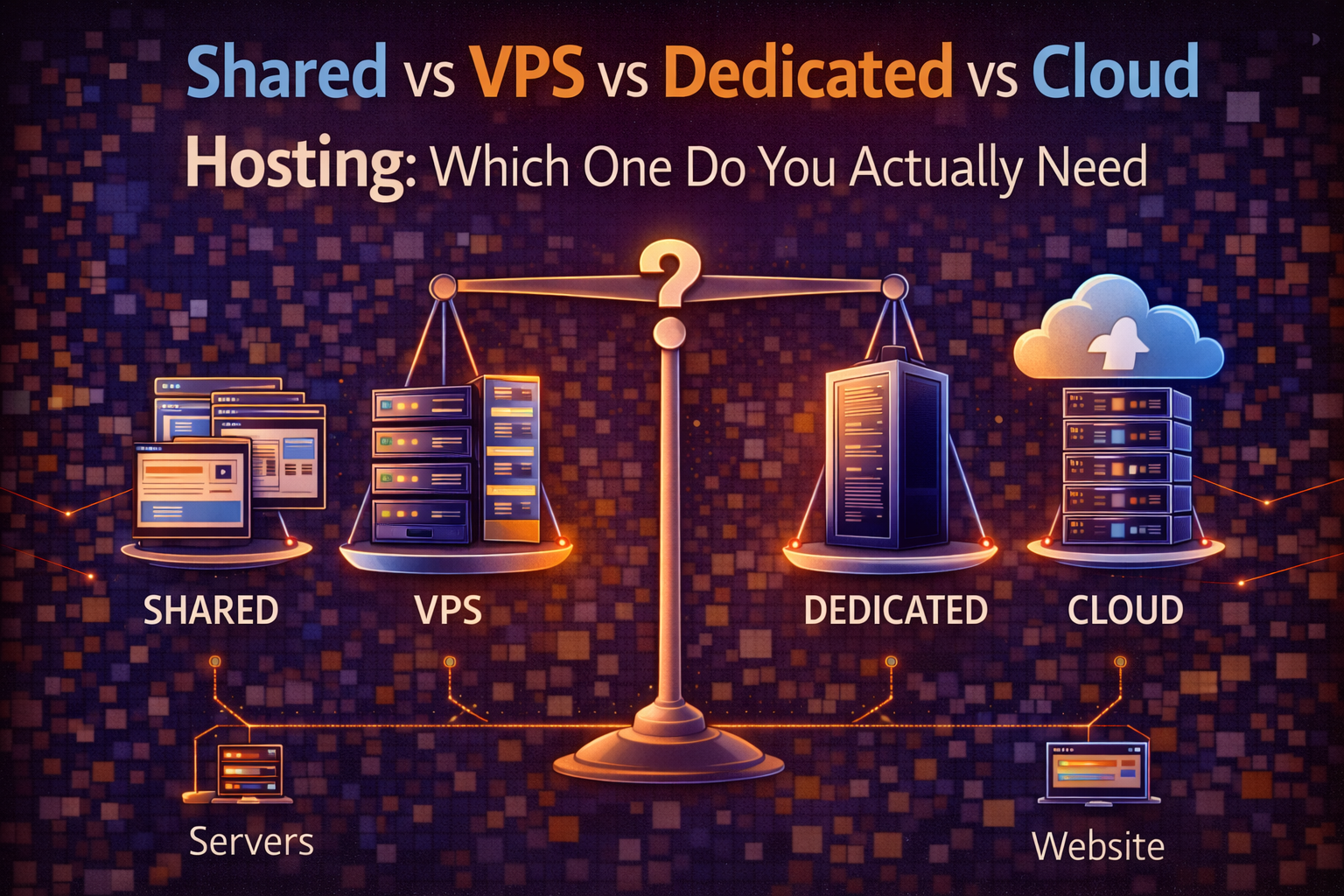
    Shared vs VPS vs Dedicated vs Cloud Hosting: Which One Do You Actually Need

    The hosting industry has a habit of making simple decisions feel complicated. Walk into any hosting provider’s pricing page and you’ll find tiers, add-ons, and technical terminology that seems designed to confuse rather than inform. The decision between shared, VPS, dedicated, and cloud hosting doesn’t need to be that complicated — each type exists for a specific set of circumstances, and matching your situation to the right type is mostly a matter of understanding what each one actually means in practice.

    This post cuts through the marketing language and gives you a clear picture of what each hosting type offers, who it’s actually right for, and what the real trade-offs are between them. By the end you’ll know exactly which type fits your current situation and when it would make sense to move to something different.


    Shared Hosting: The Starting Point for Most Websites

    Shared hosting is exactly what the name suggests — your website shares a server with a large number of other websites. The hosting provider owns and maintains the server hardware, installs and manages the software, and divides the available resources among all the sites running on that machine. You get a portion of the server’s storage, processing power, and memory in exchange for a monthly fee that’s kept low because the infrastructure cost is split many ways.

    The practical experience of shared hosting is largely invisible when things are working well. You get a control panel — usually cPanel — where you can manage your files, set up email accounts, install WordPress or other applications, and configure basic settings. The server itself runs in the background, and you never interact with it directly. For the majority of small websites, this arrangement works perfectly well and requires no technical knowledge beyond the basics of managing a website.

    The limitation of shared hosting becomes relevant when your website grows or when other sites sharing your server behave badly. If a neighboring site on your server experiences a sudden traffic spike — a viral post, a product launch, a media mention — it consumes a disproportionate share of the server’s resources, and every other site on that server slows down as a result. This is the “bad neighbor effect” that shared hosting critics frequently cite, and it’s real, though good hosting providers mitigate it through resource limits and monitoring.

    Shared hosting is the right choice when you’re building a new website and don’t yet know what traffic to expect, when your site is small enough that the resource limitations don’t cause performance problems, and when keeping costs minimal during the early stages matters more than maximum performance. Expect to pay between $3 and $10 per month at the introductory rate, with renewal rates typically higher — checking the renewal price before signing up is one of the most important things you can do when evaluating shared hosting plans, as the introductory discount often conceals a significantly higher long-term cost.


    VPS Hosting: More Control and Consistent Performance

    VPS stands for Virtual Private Server, and understanding what “virtual” means here is the key to understanding why VPS hosting is different from shared hosting in ways that matter.

    A physical server running VPS hosting is divided into multiple isolated virtual machines using software called a hypervisor. Each virtual machine — each VPS — behaves like an independent server with its own operating system, its own allocated resources, and its own isolated environment. The physical hardware is still shared between multiple VPS instances, but the virtualization layer ensures that each instance gets its guaranteed allocation regardless of what the others are doing.

    The practical difference from shared hosting is consistency. On a shared server, resources are pooled — in principle, any site can use more than its fair share during a quiet period, which means performance varies depending on what everyone else is doing. On a VPS, your resources are reserved for you. Your site gets the same processing power and memory whether the physical server is quiet or fully loaded, because the other VPS instances on the same hardware can’t touch your allocation.

    VPS hosting also gives you root access to your virtual server, which means you can install software, configure the server environment, and customize settings in ways that shared hosting doesn’t allow. This is powerful but also means more responsibility — if you misconfigure something, you need to be able to fix it. Managed VPS hosting addresses this by having the hosting provider handle server management on your behalf, giving you the performance and isolation benefits without requiring server administration skills. Unmanaged VPS is cheaper but assumes you know what you’re doing with a Linux server.

    The situations where VPS hosting makes clear sense are when your website has grown to the point where shared hosting performance is noticeably inadequate, when you’re running an application that requires specific server configuration that shared hosting doesn’t allow, when your site handles sensitive data that benefits from the isolation that VPS provides, or when consistent performance matters enough to justify the higher cost. VPS plans typically run from $20 to $80 per month depending on the resource allocation and whether management is included.


    Dedicated Hosting: Maximum Performance, Maximum Cost

    Dedicated hosting gives you an entire physical server. There’s no sharing, no virtualization, no neighbors — every resource on that machine is available exclusively to your website or application. The server’s full processing power, all of its memory, all of its storage, and its entire network connection are yours.

    The performance ceiling of dedicated hosting is significantly higher than VPS, not just because there’s no sharing but because there’s no virtualization overhead either. Virtual machines introduce a small but measurable performance cost compared to running directly on the hardware — on a dedicated server, there’s nothing between your software and the physical machine.

    The use cases that genuinely justify dedicated hosting are narrower than hosting providers’ marketing might suggest. A site handling millions of pageviews per month, an e-commerce platform processing thousands of transactions per day, a web application with strict performance requirements, or a business with compliance obligations that mandate complete control over the server environment — these are the situations where dedicated hosting’s advantages are real and meaningful. For most small and medium websites, a well-configured VPS or cloud hosting plan delivers equivalent practical performance at a fraction of the cost.

    The cost of dedicated hosting starts at around $80 per month for entry-level configurations and scales to several hundred dollars per month for high-performance servers. Adding managed support — where the provider handles server administration — typically adds $50 to $100 per month on top of the hardware cost. If you’re considering dedicated hosting, it’s worth doing the calculation on whether a cloud hosting configuration would meet your needs at lower cost, since cloud infrastructure has eliminated many of the scenarios where dedicated hosting was previously the only option.


    Cloud Hosting: The Modern Default for Scalable Websites

    Cloud hosting is the architecture that has changed the hosting industry most significantly over the past decade, and it works differently from the other types in a way that solves problems that shared, VPS, and dedicated hosting can’t address as elegantly.

    Instead of running your website on a single server — or a virtual portion of a single server — cloud hosting distributes it across a network of servers. Your files and application are replicated across multiple machines, and incoming requests are handled by whichever server in the network is best positioned to respond quickly and efficiently. If one server in the network experiences a hardware failure, your site continues running on the others without interruption. If your site experiences a sudden traffic spike, the cloud infrastructure automatically allocates additional resources to handle the load rather than letting the site slow down or go offline.

    This combination of reliability and scalability is what makes cloud hosting the dominant architecture for modern websites that need to grow without planning a server migration every time traffic increases. The infrastructure scales with demand — you’re not limited by the capacity of a single machine, and you’re not paying for maximum capacity all the time when your traffic doesn’t require it.

    The pricing model for cloud hosting reflects this flexibility. Traditional hosting types are priced as fixed monthly plans regardless of actual usage. Cloud hosting is often priced on actual consumption — you pay for the resources you use rather than a fixed allocation. This makes cloud hosting extremely cost-effective at low usage levels and predictably scalable as usage grows, but it also means costs can increase unexpectedly if traffic spikes without warning. Most cloud hosting providers for small and medium websites offer fixed-price plans that package cloud infrastructure into familiar monthly pricing to avoid this unpredictability.

    Providers like Cloudways — which is covered in a dedicated review later in this series — sit at an interesting position in the market. They’re not infrastructure providers themselves but rather managed platforms built on top of major cloud infrastructure from AWS, Google Cloud, and DigitalOcean. They give non-technical users access to genuine cloud hosting without requiring the server administration knowledge that setting up a cloud server directly would demand.


    How to Match Your Situation to the Right Type

    The decision framework that makes this choice straightforward involves three variables: your current traffic level, your technical comfort, and how much you’re willing to pay for performance and reliability.

    If you’re launching a new website and don’t yet know what traffic to expect, shared hosting is the rational starting point. The cost is minimal, the setup is simple, and you can migrate to a more capable option once you have a clearer picture of your actual needs. The migration process is manageable — most hosting providers offer migration assistance, and there are well-documented processes for moving WordPress sites between hosts without downtime.

    If your site is established and you’re consistently hitting the limitations of shared hosting — slow load times, occasional errors during traffic spikes, resource limit warnings from your provider — VPS hosting is the natural next step. Managed VPS gives you the performance improvement without requiring server administration skills. The cost increase is real but the performance difference is typically significant enough to justify it once shared hosting is genuinely limiting you.

    If you’re running a business-critical application, an e-commerce site processing significant transaction volume, or anything where downtime has a direct and measurable cost, cloud hosting’s reliability and scalability advantages make it the appropriate choice. The combination of multiple redundant servers and automatic scaling addresses the two biggest risks — hardware failure and traffic overload — that other hosting types handle less gracefully.

    Dedicated hosting occupies a specific niche that most websites never reach. If your traffic levels and performance requirements genuinely exceed what a well-configured cloud or VPS solution can provide, dedicated hosting is the answer. For most businesses, that threshold is higher than they think, and the decision to move to dedicated hosting is usually driven by compliance requirements or very specific application needs rather than by traffic volume alone.


    The Migration Question Nobody Asks at the Start

    One of the most practical things to think about when choosing a hosting type is how easy it will be to move to something different when your needs change — because they will change. A new website that starts on shared hosting and grows to the point where VPS is necessary will need to migrate at some point, and the ease of that migration varies significantly between providers.

    Some hosting providers make migration between their own hosting tiers straightforward — moving from their shared plans to their VPS plans is a managed process that they facilitate. Moving between providers is more involved but still manageable for most websites with the right guidance. The posts in this series on WordPress hosting specifically cover the migration process in detail because WordPress migrations involve database considerations that pure file migrations don’t.

    The general principle is that choosing a host you’d be comfortable growing with — one that offers the next tier you’d likely need and has a track record of facilitating migrations well — is worth factoring into the initial decision, even if you’re starting at the entry level.


    Starting With the Right Foundation

    Choosing the right hosting type isn’t a permanent decision — it’s the right decision for where your website is right now, with a clear path to a different decision when your circumstances change. Starting on shared hosting when your site is new and migrating to VPS or cloud when growth demands it is a completely sensible strategy, and it’s how the majority of established websites arrived at their current hosting arrangement.

    What matters most at the start is understanding what you’re getting and why, so that when the limitations of your current setup become apparent, you recognize them for what they are and know what the right next step looks like.

    → Related: How Much Does Web Hosting Really Cost in 2026 (No Hidden Fees Guide)

    → Also worth reading: The Best Web Hosting for Beginners in 2026 (Tested and Ranked)

    Not sure which hosting type fits your specific website situation? Leave a comment describing what you’re building, your expected traffic, and your budget — we’ll give you a direct recommendation.
  • What Is Web Hosting and How Does It Actually Work (A Plain-English Guide)

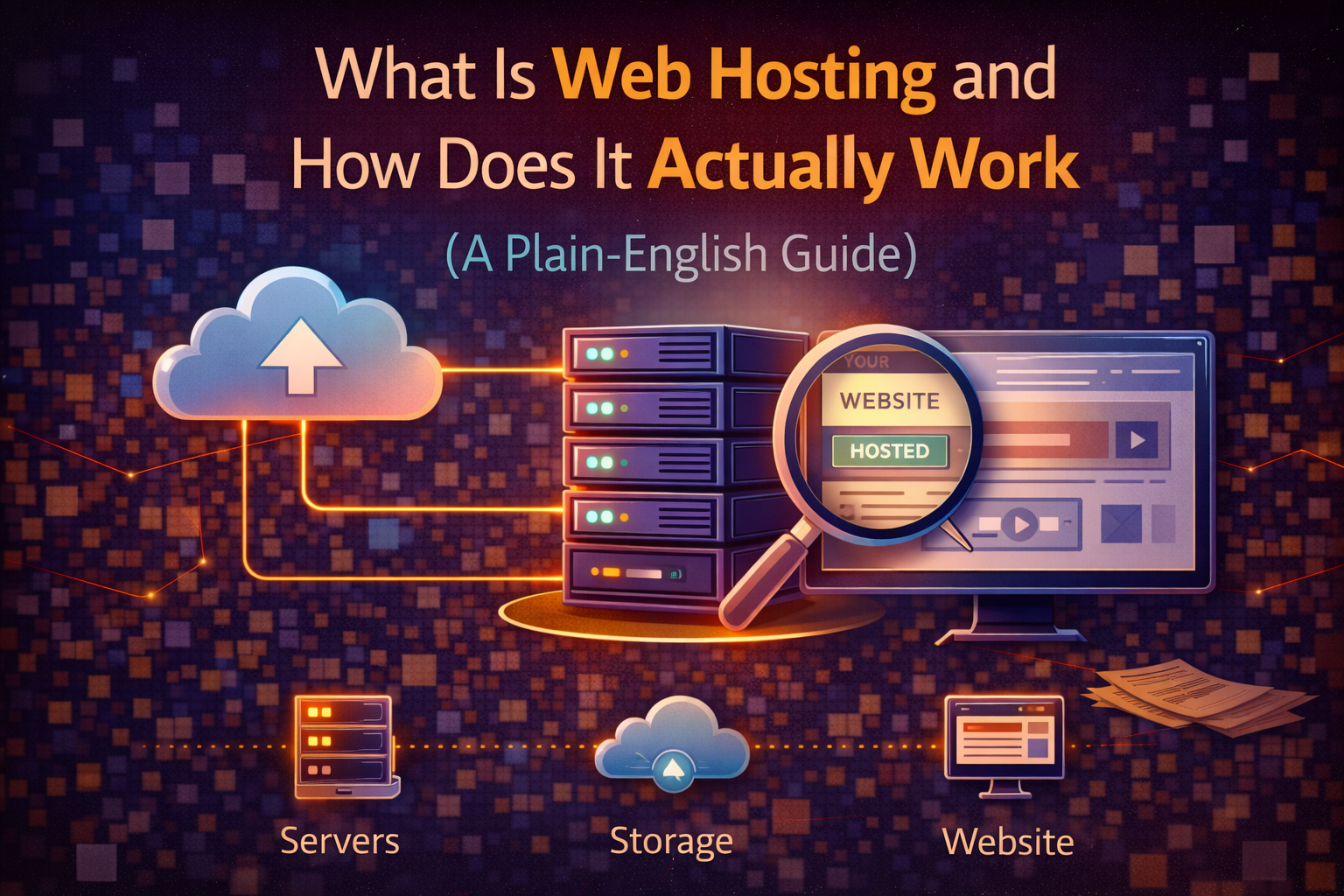
    What Is Web Hosting and How Does It Actually Work (A Plain-English Guide)

    If you’ve ever tried to understand web hosting and walked away more confused than when you started, you’re not alone. Most explanations either drown you in technical jargon or oversimplify things to the point where the explanation isn’t actually useful. This guide aims to do neither — it explains what web hosting is, how it works, and why it matters for your website in plain language that doesn’t require a computer science degree to follow.

    By the end of this post you’ll understand exactly what you’re paying for when you buy a hosting plan, why your choice of host affects your website’s speed and reliability, and what questions to ask before signing up for anything.


    The Simplest Possible Explanation

    Think of the internet as a massive city and websites as buildings in that city. If you want a building to exist in the city, it needs to sit on a piece of land. Web hosting is that land — it’s the physical space where your website’s files live so that other people can visit them.

    More specifically, your website is made up of files — HTML documents, images, videos, databases, code — and those files need to be stored somewhere that’s connected to the internet around the clock. That somewhere is a web server, which is essentially a powerful computer that runs continuously, stores your files, and delivers them to anyone who types your address into a browser.

    When someone visits your website, their browser sends a request to the server where your files are stored. The server receives that request, finds the right files, and sends them back to the browser, which assembles them into the page the visitor sees. This entire process typically happens in under a second when everything is working properly — which is why the quality of your hosting directly affects how fast your site loads.

    Web hosting is the service that provides you with space on one of these servers. You pay a monthly or annual fee to a hosting company, they give you space on their server infrastructure, and your website becomes accessible to anyone in the world with an internet connection.


    What’s Actually Inside a Web Server

    A web server is hardware — a physical machine — but it’s also software. The hardware side is a computer built for continuous operation: more processing power than a typical desktop, large amounts of storage, and multiple redundant components so that if one part fails, the server keeps running. These machines are housed in data centers — specialized facilities with backup power, cooling systems, physical security, and multiple internet connections to ensure they stay online regardless of what happens.

    The software side is what actually handles the requests that come in from browsers. When your server receives a request for a page on your site, the server software — most commonly Apache or Nginx — processes that request, retrieves the appropriate files, and sends them back. If your site uses a content management system like WordPress, there’s additional software involved: a database that stores your content and a programming language like PHP that assembles the page dynamically before sending it.

    You never interact with most of this directly. The hosting company manages the server hardware and software, keeps everything updated and secure, and provides you with a control panel — usually cPanel or a proprietary alternative — where you can manage your files, set up email accounts, install applications, and configure settings without touching the underlying infrastructure.


    Shared, VPS, Cloud, and Dedicated: Why Different Types Exist

    Not everyone’s website needs the same amount of server resources, and not everyone’s budget allows for the same level of infrastructure. This is why web hosting comes in different types — each representing a different arrangement of how server resources are allocated and how much you pay for them.

    Shared hosting is the entry-level option. Your website shares a server with anywhere from dozens to hundreds of other websites, and the server’s resources — processing power, memory, bandwidth — are divided among all of them. This is why shared hosting is cheap: the cost of the server is split many ways. The trade-off is that if another website on your server experiences a traffic spike or runs inefficient code, it can slow your site down too. For small websites with moderate traffic, shared hosting is perfectly adequate. For high-traffic sites or anything where performance is critical, it’s a limitation.

    VPS hosting — Virtual Private Server — is the middle ground. The physical server is still shared, but virtualization technology divides it into isolated containers, each with its own guaranteed allocation of resources. Your site isn’t affected by what other sites on the same physical hardware are doing because your resources are reserved for you. VPS hosting costs more than shared but significantly less than having a server to yourself.

    Dedicated hosting gives you an entire physical server. No sharing, no virtualization, maximum performance and control. This is the option for high-traffic websites, applications with specific security requirements, or businesses that need complete control over their server environment. The cost reflects this — dedicated servers typically start at $80 to $200 per month and scale up significantly from there.

    Cloud hosting distributes your website across multiple servers rather than keeping it on a single machine. This means that if one server has a problem, your site continues running on the others — and that traffic spikes can be handled by automatically drawing on additional server capacity rather than overwhelming a single machine. Cloud hosting has become the dominant architecture for modern websites because of its reliability and scalability, and it’s now available at price points that make it accessible to small businesses as well as enterprises.

    There’s a full comparison of all four types with specific recommendations for each situation in the next post in this series, so if you’re trying to decide which type is right for your website, that’s where to go after this one.


    What Bandwidth and Storage Actually Mean

    Hosting plans are marketed with numbers — “100GB storage,” “unlimited bandwidth,” “99.9% uptime” — and understanding what those numbers mean in practice helps you evaluate plans honestly rather than being swayed by large-sounding figures.

    Storage is the amount of space on the server allocated to your website’s files. For most websites — a blog, a small business site, a portfolio — the actual storage requirement is surprisingly small. A typical WordPress site with a few dozen pages and a reasonable image library uses between 1GB and 5GB of storage. Even a site with hundreds of posts and thousands of images rarely exceeds 20GB. When a hosting plan advertises “unlimited storage,” it means they won’t impose a hard cap, but their terms of service will include fair use provisions that kick in if you’re genuinely using server resources at a level that affects other customers.

    Bandwidth refers to the amount of data transferred between your server and visitors’ browsers each month. Every time someone loads a page on your site, data is transferred — the page files travel from the server to their browser. The more visitors you have and the heavier your pages are, the more bandwidth you consume. Like storage, most small websites use a fraction of even modest bandwidth allocations. A site getting 10,000 visitors per month with average page sizes of 2MB uses roughly 20GB of bandwidth — well within the allocation of most basic shared hosting plans.

    The number that actually matters most for everyday experience isn’t storage or bandwidth — it’s server response time. This is how quickly the server starts sending data after receiving a request, and it’s the primary factor that determines whether your site feels fast or slow. Good hosting providers invest in hardware and infrastructure that keeps server response times low. Budget providers cut costs in ways that result in slower response times. This is one of the most important things to test when evaluating hosting providers, and it’s something that review sites and benchmarks measure that raw spec comparisons don’t capture.


    Uptime: The Number That Determines Whether Your Site Exists

    Every hosting provider advertises uptime guarantees — typically 99.9% or higher. Uptime is the percentage of time your website is accessible to visitors, and the gap between different uptime figures is larger than the percentages suggest.

    99% uptime sounds good but means your site could be down for about 87 hours per year — more than three and a half days. 99.9% uptime means roughly 8.7 hours of potential downtime per year. 99.99% means less than an hour. The difference between 99% and 99.9% is the difference between a site that’s occasionally embarrassingly unavailable and one that’s reliably accessible.

    Uptime guarantees in hosting contracts are typically backed by service level agreements that entitle you to compensation — usually account credits — if uptime falls below the guaranteed level. These guarantees are worth reading carefully because they often exclude scheduled maintenance windows and define downtime in ways that exclude brief outages.

    The most reliable way to assess a host’s real uptime performance isn’t their marketing materials — it’s third-party monitoring data and independent reviews from sites that have actually tested the host over time. Consistently high uptime across multiple independent tests is a much better signal than a contractual guarantee.


    The Control Panel: Where You Actually Manage Everything

    The control panel is the interface you use to manage your hosting account — it’s the practical face of the infrastructure described above. Most shared and VPS hosting providers use cPanel, which has been the industry standard for decades and provides access to everything from file management and email account setup to database administration and domain configuration.

    Some providers — particularly newer ones and those running proprietary infrastructure — use custom control panels. Hostinger’s hPanel and SiteGround’s Site Tools are examples of custom interfaces that replace cPanel with something the provider has built themselves. These aren’t inherently better or worse than cPanel — they’re different, and familiarity matters if you’ve already developed experience with one interface or the other.

    Managed WordPress hosting often replaces the traditional control panel entirely with a WordPress-specific dashboard that focuses on the things WordPress site owners actually need — staging environments, automatic updates, performance optimization, and security monitoring — and removes the general server management tools that most WordPress users never touch.


    Why Your Choice of Host Matters More Than You Think

    The hosting decision affects your website in ways that aren’t obvious until something goes wrong. Speed affects search engine rankings — Google uses page speed as a ranking factor, which means a slow host doesn’t just frustrate visitors, it actively suppresses your visibility in search results. Security matters because a host that doesn’t keep its server software updated or doesn’t provide adequate security infrastructure exposes your site to vulnerabilities that aren’t your fault but become your problem. Support matters because when something breaks — and at some point, something always breaks — the quality and responsiveness of your host’s support determines how quickly you’re back online.

    The cheapest hosting option is rarely the best value once these factors are considered. A host that costs $2 per month but has mediocre uptime, slow server response times, and support that takes 48 hours to respond costs significantly more than the price difference when you factor in the traffic you lose during downtime and the ranking impact of consistently slow page loads.

    This doesn’t mean you need to spend a lot on hosting, particularly when you’re starting out. It means you should evaluate hosts on the full picture — performance, reliability, support, and price — rather than on price alone. The reviews and comparisons throughout this series do exactly that, with real performance data rather than just feature list comparisons.


    What to Look for When Choosing a Host

    Before signing up for any hosting plan, five things are worth checking beyond the advertised price.

    The renewal price is the first and most important. Hosting providers routinely offer steep introductory discounts — sometimes 70% or more off the regular price — that apply only to the first billing period. After that, you pay the full renewal rate, which can be two to four times the introductory price. Always check the renewal price before signing up so you’re comparing the real long-term cost rather than the promotional rate.

    The refund policy tells you how much risk you’re taking. Most reputable hosts offer a 30-day money-back guarantee, which gives you time to test actual performance before fully committing. Some offer longer guarantees. A host with no refund policy is a red flag.

    The data center locations determine how fast your site loads for visitors in different parts of the world. A server in the United States delivers pages faster to US visitors than to visitors in Europe or Asia. If your audience is geographically concentrated, choose a host with data centers close to that audience.

    The support quality is difficult to assess from marketing materials but critical in practice. Look for independent reviews that specifically discuss support response times and resolution quality, and check whether the support channels available — live chat, phone, ticket — match your preferences and the urgency with which you’d need help in a crisis.

    The actual performance data — server response times, uptime measured over time, page load speeds — should come from independent sources rather than the host’s own claims. Review sites that conduct systematic performance testing over months rather than single-point snapshots give the most reliable picture.


    Starting From Here

    Web hosting doesn’t need to be complicated to choose well. Once you understand that you’re essentially renting server space, that different types of hosting represent different resource allocations at different price points, and that performance and reliability matter more than raw specs and introductory pricing, the decision becomes much more manageable.

    The rest of this series covers everything that follows from this foundation — the differences between hosting types in detail, honest reviews of the major providers with real performance data, specific recommendations for different use cases and budgets, and guides to the technical aspects of running a website that most hosting providers gloss over in their marketing.

    → Related: Shared vs VPS vs Dedicated vs Cloud Hosting: Which One Do You Actually Need

    → Also worth reading: How to Choose a Web Host Without Getting Burned: 10 Things to Check Before You Buy

    New to web hosting and not sure which type or provider makes sense for your specific situation? Leave a comment describing what kind of website you’re building and what your budget is — we’ll point you in the right direction.